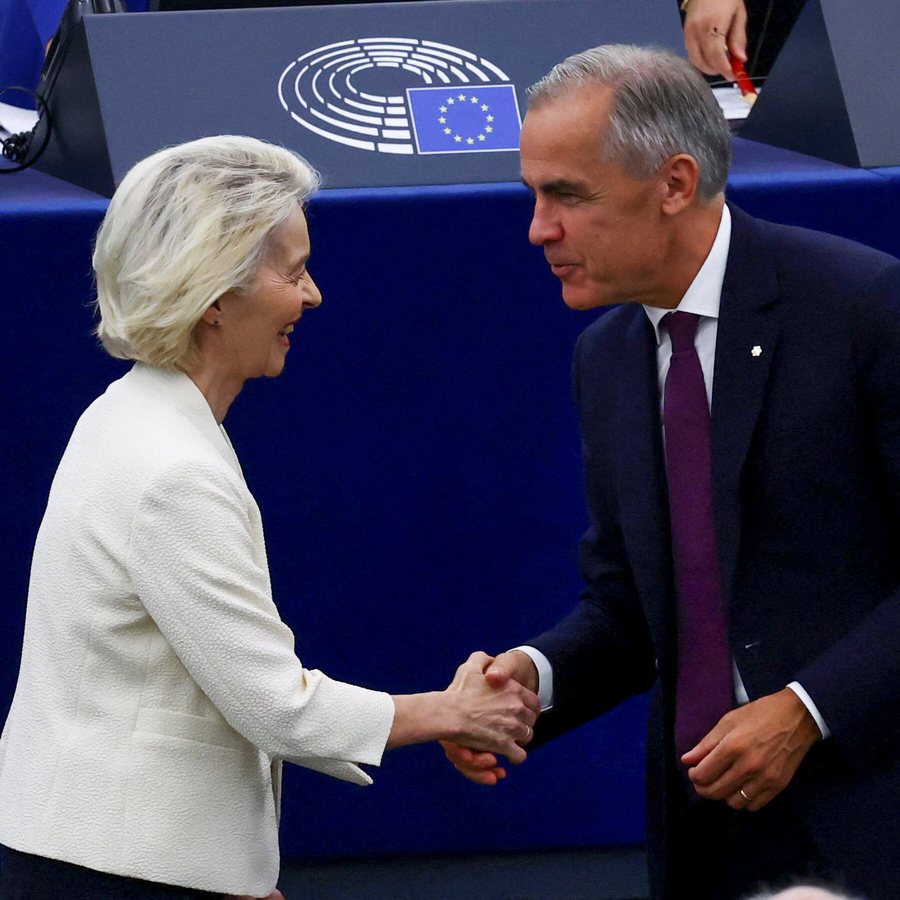
Canada could become the first country to hold associate membership of the European Union under a proposal discussed between European Commission President Ursula von der Leyen and Canadian Prime Minister Mark Carney at the European Parliament in Strasbourg on Wednesday.
The talks mark a significant step in Brussels' efforts to deepen ties with like-minded partners as relations with the United States become increasingly unpredictable. Associate membership would give Canada a formalised, structured relationship with the EU without full accession, a status no country has held before.
For the Caribbean, the development carries particular weight. The European Union is a major trading partner for the region, and any shift in how Brussels structures its external relationships could influence the terms of trade, development cooperation and diplomatic engagement that Caribbean states, including the Commonwealth of Dominica, rely on. Dominica's economy is closely tied to European markets, particularly through banana and other agricultural exports, and the island benefits from EU development funding and preferential trade arrangements under the Cotonou and Samoa agreements.
The meeting in Strasbourg between von der Leyen and Carney signals that both sides see value in moving beyond traditional trade agreements. Canada and the EU already have a comprehensive free trade deal, the Comprehensive Economic and Trade Agreement, known as CETA, which has been in provisional application since 2017. Associate membership would go further, potentially aligning Canada more closely with EU standards, foreign policy positions and regulatory frameworks.
The timing reflects a broader realignment. Under the current United States administration, Washington has adopted a more confrontational posture toward both its northern neighbour and its European allies, unsettling longstanding alliances. Canada has been actively seeking to diversify its trade and diplomatic partnerships, while the EU has been looking to strengthen its network of democratic allies.
No formal proposal has been tabled, and the concept of associate membership remains undefined in EU law. Any such arrangement would require extensive negotiation and the agreement of all 27 member states. The discussion is at an exploratory stage, but the fact that it is being held at the highest levels suggests both sides are serious about finding new ways to institutionalise their relationship.
For small island states in the Caribbean, the outcome of such discussions is not abstract. The EU's external partnerships shape the rules of engagement on climate finance, development assistance, migration and trade preferences. If the EU begins creating new categories of membership for large economies like Canada, Caribbean nations will be watching closely to see whether similar arrangements might be offered to smaller partners, or whether the bloc's attention will shift toward larger, more strategically significant allies.
Dominica has long maintained diplomatic and economic ties with both Canada and the European Union. Canada is home to a significant Dominican diaspora, particularly in Toronto and Montreal, and remittances from Canada form an important part of household income on the island. The EU, meanwhile, remains a key source of grant funding for infrastructure, climate resilience and education projects.
Any realignment of global alliances that draws Canada and Europe closer together could have ripple effects across the Atlantic, including in the Eastern Caribbean. Officials in Roseau have not commented on the Strasbourg talks, but the Ministry of Foreign Affairs is understood to monitor developments in EU external relations closely, given their potential impact on trade and aid.
The discussions between von der Leyen and Carney are expected to continue in the coming months, with further talks likely at upcoming international summits. Whether associate membership becomes a formal offer or remains a diplomatic concept, the conversation itself signals a changing world order in which traditional alliances are being renegotiated and new partnerships are being explored.