Fears are mounting that the leaders of the United States, China and Russia could strike a deal over the heads of smaller nations, after reports that a trilateral meeting between Donald Trump, Xi Jinping and Vladimir Putin may take place at the APEC summit in Shenzhen, China, next week. Ukrainian President Volodymyr Zelenskyy has voiced concern that such a gathering could produce a "Yalta 2.0" outcome, a reference to the 1945 conference at which Allied leaders divided post-war spheres of influence in Europe.
The concern centres on who would be left out of the room. Ukraine, eastern Europe and the Baltic states are not expected to be present, and neither are Taiwan or Iran. The worry, as reported, is that the powers involved could trade away the interests of the excluded states in pursuit of their own objectives, with those most directly affected having no seat at the negotiating table.
According to the reporting, Putin envisions a geopolitical trade-off, and Trump appears to endorse the idea. Both Washington and Moscow are also reported to be seeking China's help in extricating themselves from their respective wars, which gives Beijing a central role in any arrangement that might emerge. Putin is said to be looking for consensus on a new global order, a prospect that alarms governments which fear they would have no voice in its shape.
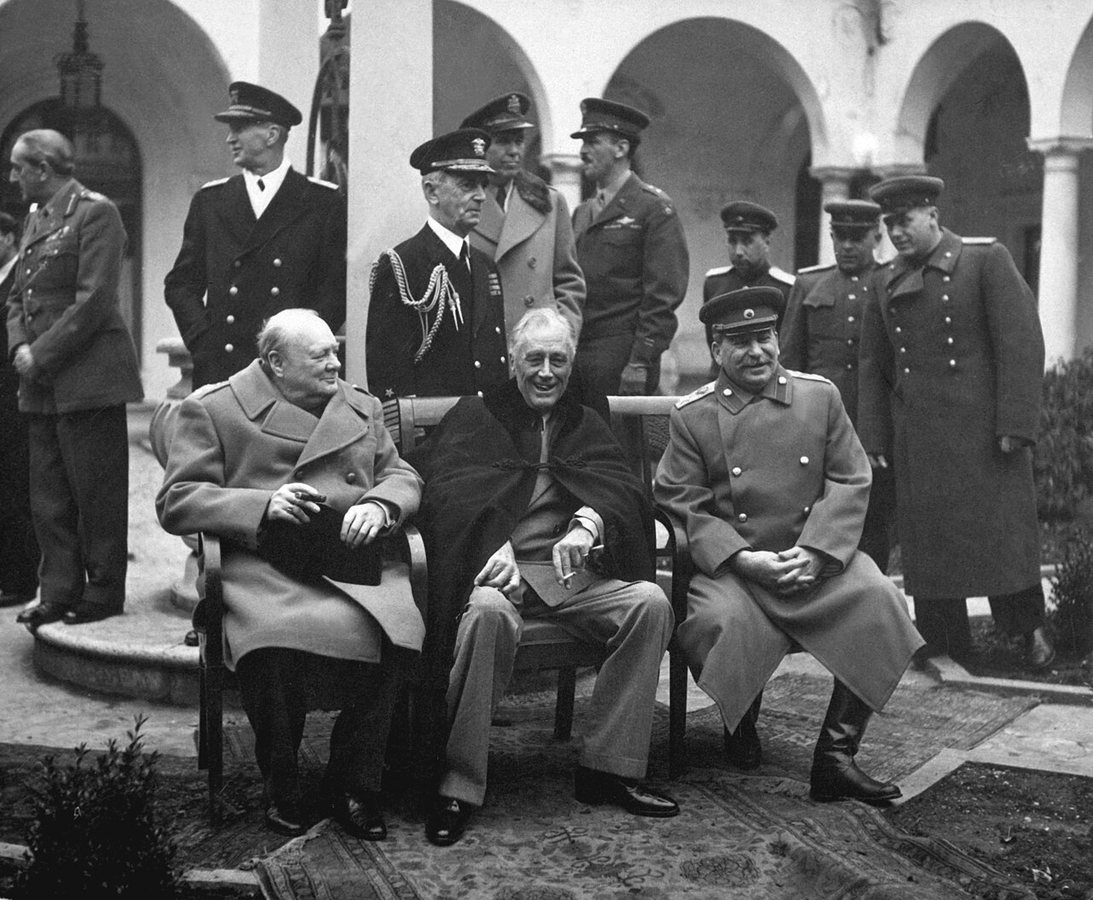
The Yalta conference of February 1945, attended by Franklin Roosevelt, Winston Churchill and Joseph Stalin, has long since become a byword for great-power betrayal, shorthand for decisions made by big powers about the futures of smaller nations without their consent. Its legacy is the division of Europe into spheres of influence that lasted for decades, which is why the comparison carries such weight in Kyiv and in other capitals along Russia's western flank.
For the states that feel most exposed, the question is less about any single document than about process. Officials and commentators in the region have argued that a settlement negotiated among three powers, without the countries whose territory or sovereignty is at stake, would repeat the logic of 1945 whatever its wording. Such concerns are not new, but a visible meeting on the sidelines of a major economic forum would give them a concrete focus.
Much remains uncertain. It is not yet confirmed that the trilateral meeting will actually take place, and it is unclear what, if anything, would be traded should the three leaders meet. Analysts and officials watching the APEC summit will be looking closely for any sign of such an arrangement, and for whether the interests of excluded states are raised or ignored in the discussions that follow.
2