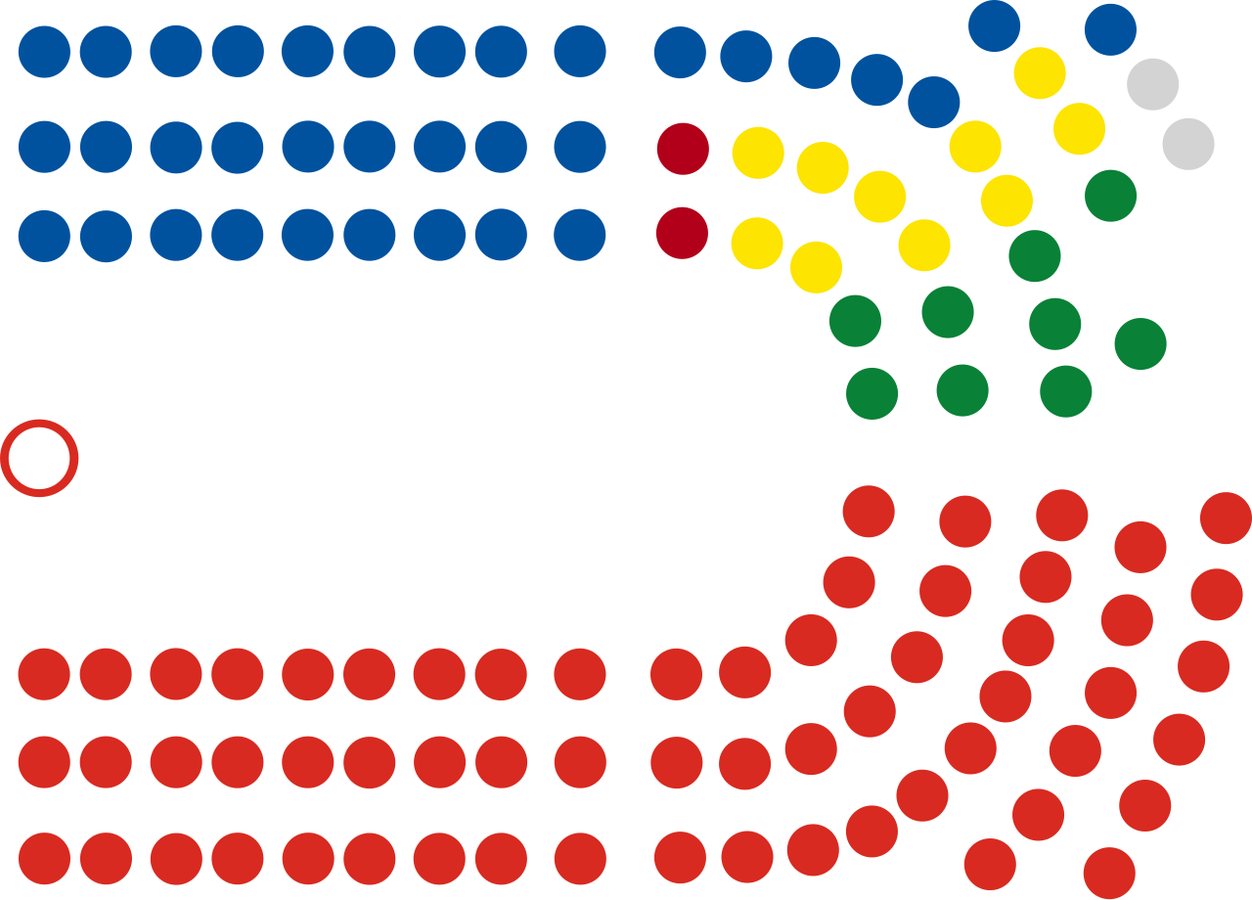
New Zealand's general election held on Saturday has ended without a clear winner, and officials have described the result as too close to call. A right-leaning coalition led by the National Party hopes to remain in power, but whether it does so will depend on votes that have not yet been counted.
Almost 400,000 special votes are still waiting to be processed. These ballots are large enough to shift the final outcome, and because the margin between the coalition and its rivals is so narrow, their balance could decide whether the current arrangement continues. The coalition's prospects therefore rest on arithmetic that will not be settled until the count is complete.
Official results are not expected until 27 November, which means New Zealanders face several weeks of waiting before the election outcome is confirmed. Until the count is finished, the shape of the next government remains unknown, and no party can be certain of the numbers it will have in the new parliament.
The uncertainty has turned the post-election period into a slow process rather than a quick handover of power. Any movement in the special vote count could change which parties hold the numbers needed to govern, and the outcome will only become clear once every ballot has been counted and the final results are published.
Special votes are a standard part of New Zealand's electoral process and are counted separately from ordinary polling-day ballots. Their size this year has made them the central factor in the result, with the gap between the blocs small enough that a relatively modest shift among these ballots could alter the final picture.
5