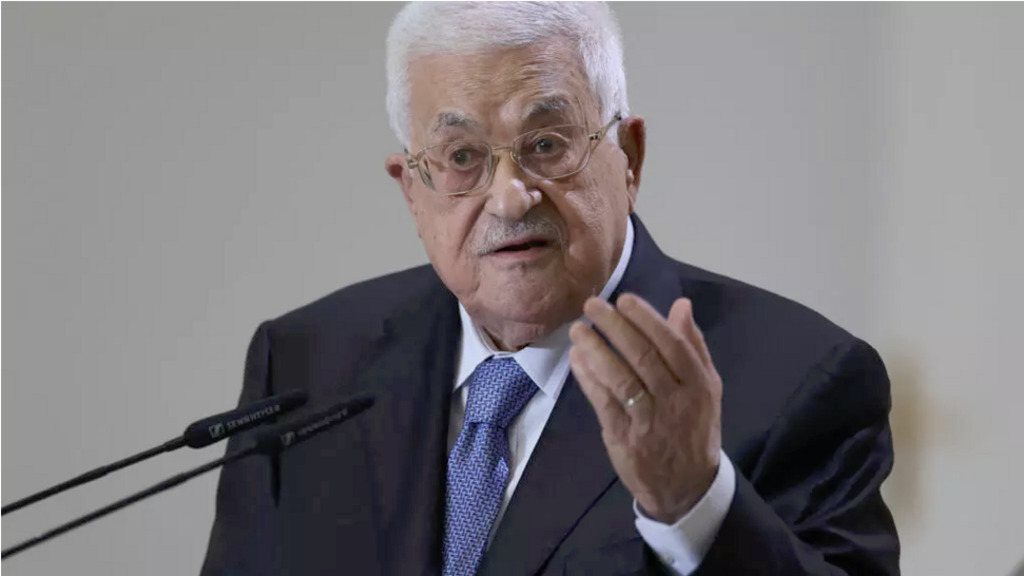
The United States has refused a visa for Palestinian President Mahmoud Abbas to travel to New York for next week's United Nations General Assembly, a source familiar with the decision said, in a move that will keep the Palestinian leader from addressing the annual gathering of world leaders.
The State Department said separately that it would deny visas to Palestinian officials, pointing to what it described as failures to reform and actions it said undermined prospects for peace. The department did not name the officials affected or set out a detailed list of the measures it was citing.
The decision marks a second consecutive year in which Washington has blocked Abbas from attending the General Assembly in person. The visa refusal means the Palestinian president will not be able to deliver his address from the UN podium in New York, where heads of state and government gather each September.
The General Assembly is the one forum where every UN member state, including those without full diplomatic recognition, can speak on equal terms. A denied visa therefore removes a platform that Palestinian leaders have used to press their case before a global audience and to meet other leaders on the margins of the session.
The State Department's statement tied the visa denials to its assessment of Palestinian governance and to steps it said ran counter to a negotiated settlement. It gave no indication of how long the restrictions would remain in place or whether any exemptions would be considered.
There was no immediate public response from the Palestinian leadership to the announcement. Palestinian officials have in the past condemned similar visa decisions as a breach of the host country's obligations under the UN headquarters agreement, which requires the United States to allow access to the United Nations for those with legitimate business at the organisation.
The United States hosts the UN headquarters in New York under a 1947 agreement that generally obliges it to facilitate travel for representatives of member states and observers. Successive disputes over visas have arisen when Washington has judged that an applicant's presence would be contrary to its security or foreign policy interests.
For Dominica and other Caribbean states, the question of access to the United Nations is closely watched. Small island developing states rely on the General Assembly and its high-level week to raise issues such as climate finance, hurricane recovery and the special vulnerabilities of small economies, and they have consistently defended the principle that all members should be able to attend.
Caribbean governments have also maintained long-standing support for a two-state solution to the Israeli-Palestinian conflict, in line with positions taken within the United Nations and the wider international community. The region's diplomats have often used the General Assembly to argue that multilateral institutions must remain open to all members.
The visa decision comes as the assembly prepares to open its new session, with a heavy agenda expected to include the conflicts in the Middle East, climate change and reform of the international financial system. Whether the Palestinian question will be raised from the floor by other delegations remains to be seen.
Abbas has addressed the General Assembly remotely in the past when travel was not possible. It was not immediately clear whether he would seek to speak by video link this year or whether the Palestinian delegation would be represented at a lower level.
The United States has not said whether the restrictions on Palestinian officials would extend beyond the assembly period. The State Department's language left open the possibility of further measures, but officials gave no timeline and no further details.