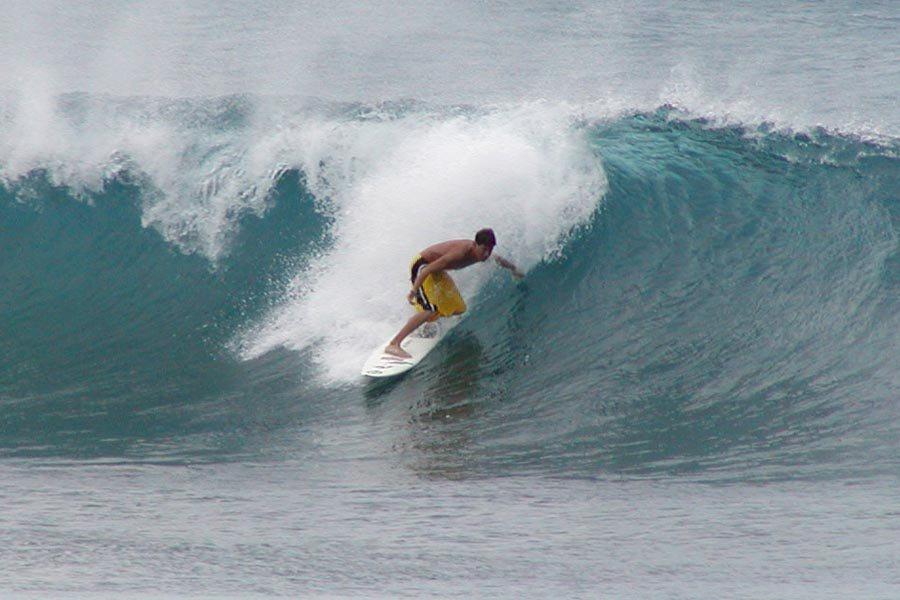
More than three-quarters of the world's most celebrated surf breaks are at high risk from the climate crisis, a new study has found, with rising sea levels, changing tide patterns and coastal development threatening to submerge or crush some of the planet's most iconic waves.
The analysis examined dozens of famous waves located within world surfing reserves (WSR), a designation that recognises surf breaks of outstanding cultural and environmental value. It concluded that the majority of these sites face significant danger from a combination of factors: rising seas that alter the way waves break, shifting sands that change the shape of the seabed, and hardened shorelines such as sea walls and rock armour that can destroy the natural surf zone.
The findings carry consequences far beyond the surfing community. Surf breaks are economic and cultural assets for coastal communities, drawing tourism, supporting local businesses and forming part of the identity of places from Hawaii to Australia, Indonesia, Peru and beyond. When a wave is lost, so too is the income and heritage attached to it.
According to the study, the problem is not limited to any single region. World surfing reserves span several continents, and the risks identified are global in nature. As sea levels rise, waves that once broke predictably over reefs and sandbanks may find themselves breaking in deeper water, losing the shape and power that made them famous. In other cases, coastal defences built to protect property can interfere with the natural movement of sand, smothering the very breaks they were meant to sit beside.
The research highlights that the threat is not uniform. Some breaks may be submerged entirely, while others could be degraded or destroyed by the hardening of coastlines. Changing tide levels add another layer of uncertainty, as many world-class waves depend on specific tidal windows to perform at their best. Even small shifts in water depth can transform a world-renowned wave into an ordinary one, or eliminate it altogether.
For small island nations, the implications are particularly acute. Many Caribbean islands, including Dominica, rely on coastal and marine resources for tourism, fishing and cultural life. While the study focuses on world surfing reserves, its broader message about the vulnerability of coastlines to climate change resonates across the region. Rising seas and stronger storms already pose a direct threat to beaches, reefs and coastal infrastructure throughout the Eastern Caribbean.
The study's authors warn that without action to address climate change and to manage coastal development more sensitively, many of the world's best surf breaks could be lost within decades. They argue that protecting surf breaks is not merely a matter of sport, but of preserving natural systems that support biodiversity, protect shorelines and sustain local economies.
The findings add to a growing body of evidence that climate change is reshaping the world's coastlines in ways that are difficult to reverse. For surfers, the loss of a legendary break is a cultural blow. For the communities that depend on those waves, it is an economic one. And for the environment, it is a sign that the pressures on the ocean are mounting faster than many had anticipated.
As governments and coastal managers consider how to adapt, the study suggests that solutions will need to balance protection of property with the preservation of natural coastal processes. Hard defences alone, it warns, may solve one problem while creating another — a lesson that applies as much to the Caribbean as to the famous surf coasts of the Pacific and Indian Oceans.
4