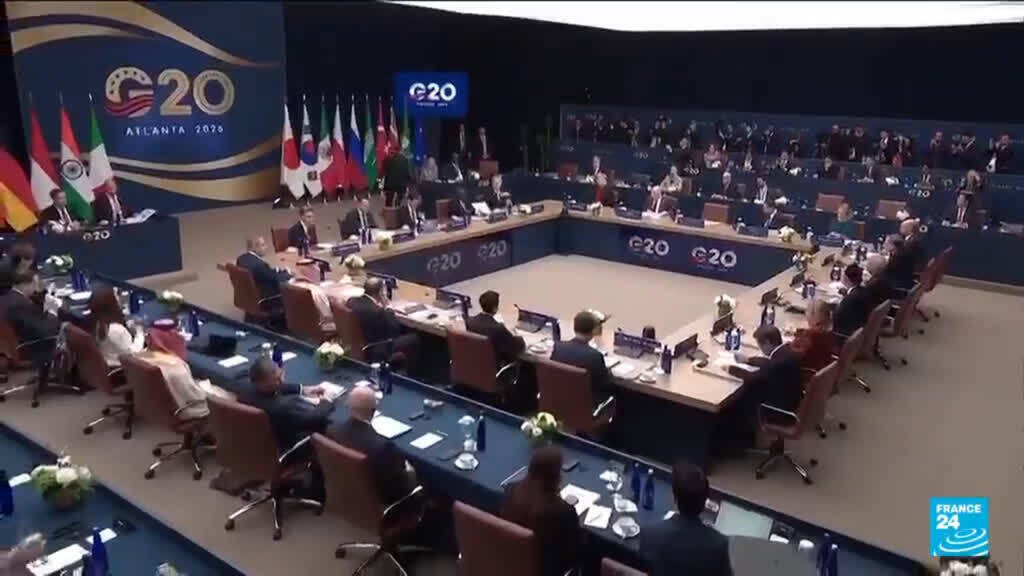
European ministers confronted Russia's Foreign Minister Sergei Lavrov over the war in Ukraine at the G20 foreign ministers' meeting in the United States, and refused to join him for the traditional group photograph. The gathering closed two days of talks without agreement on several key global security issues, underlining the deep divisions that Russia's presence has created within the group.
The meeting's conclusion was marked by these open disagreements rather than by a shared position on the major security questions on the agenda. The refusal to pose with Lavrov was a visible sign of the diplomatic distance between Moscow and European governments, which continue to hold Russia responsible for its full-scale invasion of Ukraine. The photograph is a traditional feature of G20 ministerial gatherings, and the decision to stay out of it made the rift visible to observers and participants alike.
On the sidelines of the meeting, US Secretary of State Marco Rubio signed an Arctic cooperation agreement with Japan and South Korea. The deal sets out a framework for collaboration among the three countries in the Arctic region, an area of growing strategic and economic interest as polar ice recedes and new shipping and resource routes become more accessible. The agreement was reached outside the formal negotiating sessions, which is why it stood apart from the stalled discussions on security questions.
Rubio also confirmed Washington's participation in the World Expo to be held in Riyadh in 2030, a commitment that signals continued American engagement with Saudi Arabia on major international events. The Expo announcement was one of the few areas of clear progress to emerge from the sidelines, in contrast to the unresolved disputes at the centre of the talks.
The divisions on display reflect a wider challenge for the G20, which brings together major economies including the United States, China, Russia and members of the European Union. Russia's continued participation has repeatedly tested the forum's ability to reach consensus, with Western governments pressing for condemnation of the war in Ukraine while Moscow rejects that framing. The ministers' inability to agree on the security issues means that the questions raised at the meeting will have to be taken up again in later G20 forums, although the source material does not specify when or where those discussions will resume.
Jack Pownall reported on the closing of the meeting and the sidelines exchanges between delegations.
1