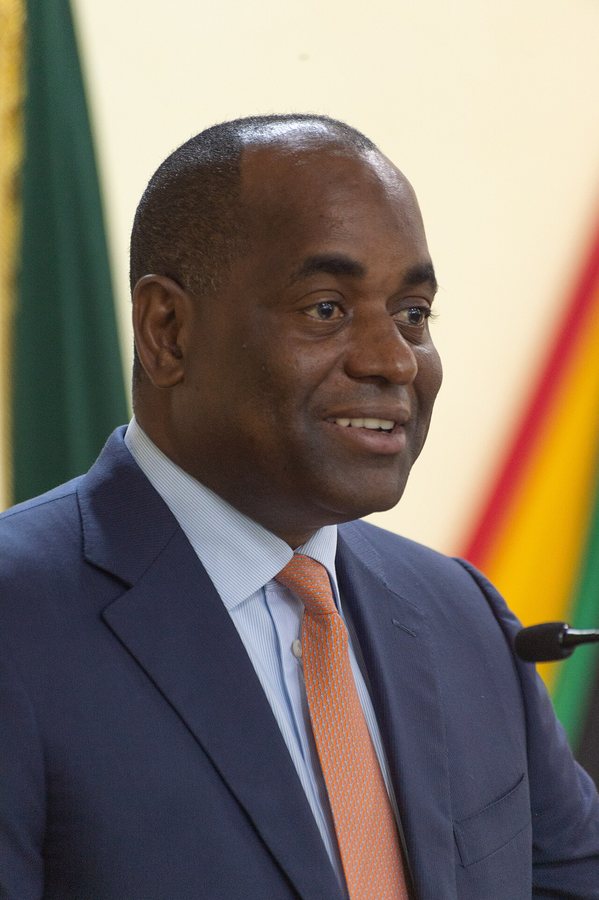
Prime Minister Roosevelt Skerrit has signalled that his administration is working towards the abolition of personal income tax for Dominican workers by 2028, describing himself as philosophically opposed to the fiscal measure. The Prime Minister made the remarks during a town hall meeting on Tuesday night, addressing supporters of the ruling Dominica Labour Party (DLP) ahead of the next general election.
Speaking to the gathering, Skerrit said he has long held the view that personal income tax places an unnecessary burden on working people. He indicated that the government would pursue a phased approach to removing the tax, with the target of completing the process within the next few years. The announcement forms part of a broader set of commitments the Prime Minister has been outlining as the DLP prepares for the upcoming electoral contest.
The Prime Minister did not provide detailed figures on the projected revenue loss or the specific measures that would compensate for the removal of the tax. However, he expressed confidence that the country's economic trajectory, including growth in tourism, geothermal energy development, and other sectors, would provide the fiscal space needed to support the change. He also pointed to the government's record of infrastructure investment and social programmes as evidence of its capacity to manage public finances responsibly.
Personal income tax in Dominica is currently levied on earnings above a certain threshold, with rates applied progressively. The proposal to eliminate the tax entirely would represent a significant shift in the country's fiscal policy and would require careful planning to ensure that public services and capital projects remain fully funded. Successive governments have relied on a mix of personal and corporate taxes, customs duties, and other revenues to finance the national budget.
Skerrit's comments come at a time when the government is also promoting Dominica as an attractive destination for investment, particularly through its Citizenship by Investment programme. Revenue from that programme has been a major source of funding for public projects, including the international airport under construction at Douglas-Charles Airport and housing initiatives across the island. The Prime Minister suggested that continued strong performance in these areas would help make the income tax abolition feasible.
The town hall meeting was part of a series of public engagements by the DLP leadership ahead of elections, which are constitutionally due within the next few years. Skerrit has led the party and the government since 2004, and his administration has won successive general elections. The proposal to end personal income tax is expected to feature prominently in the party's campaign platform as it seeks to renew its mandate.
No official timeline or legislative timetable has been announced, and the Prime Minister's remarks were framed as an indication of intent rather than a formal policy commitment. Observers will be watching for further details in the coming months, particularly in the context of the national budget and any pre-election fiscal announcements. The government has not yet indicated whether the abolition would apply to all workers or whether certain income brackets would be treated differently.
For now, the Prime Minister's statement sets out a clear direction of travel for the country's tax policy. If realised, the change would leave more money in the pockets of Dominican workers and would mark a major milestone in the island's economic development. The coming months will determine how the proposal is translated into concrete legislative action.
75