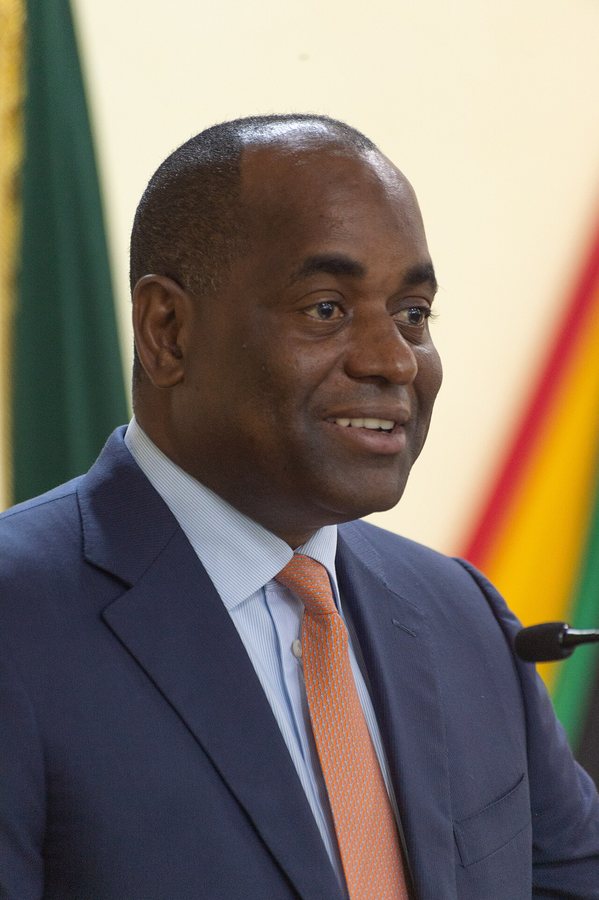
Prime Minister Roosevelt Skerrit has defended the presence of Special Branch officers near publicly announced meetings, stating that intelligence gathering is a routine component of national security operations and not a new development.
Skerrit was responding to allegations that members of his security detail were present at public gatherings, which critics suggested amounted to political monitoring. He argued that such practices are standard and have been carried out by successive administrations.
«This is nothing new,» Skerrit said, according to remarks reported by Dominica News Online. «Special Branch has always monitored public meetings as part of its intelligence-gathering duties.»
The Prime Minister emphasised that the role of the Special Branch is to ensure the safety and security of all citizens, including those attending public events. He dismissed suggestions that the monitoring was intended to intimidate political opponents or stifle dissent.
The controversy arose after reports that officers from the Special Branch, a unit within the police force responsible for intelligence and national security, were seen near venues where public meetings were being held. While the specific meetings were not detailed in the initial reports, the allegations sparked debate about the balance between security and civil liberties in the Commonwealth of Dominica.
Skerrit’s defence comes amid broader discussions about governance and transparency in the small island nation. The Prime Minister has consistently maintained that his government respects the right to peaceful assembly and freedom of expression, as guaranteed by the Constitution.
Opposition figures and civil society groups have previously raised concerns about the use of state resources for political purposes. However, Skerrit insisted that the Special Branch operates within the law and that its activities are necessary to protect national interests.
«We live in a world where security threats are real, and we must be vigilant,» he said. «The work of the Special Branch is not directed at any particular group or individual.»
The Prime Minister did not provide specific examples of past monitoring operations, but noted that the practice dates back many years. He also did not indicate whether the government would review or adjust the protocols governing such activities.
Legal experts in the region have noted that while intelligence agencies in Caribbean states often monitor public events, the practice must be conducted with respect for fundamental rights. In Dominica, the Constitution guarantees freedom of assembly and association, and any surveillance must be justified by a legitimate security concern.
The Special Branch, originally established during the colonial era, has evolved into a modern intelligence unit that works closely with other law enforcement agencies. Its responsibilities include counter-terrorism, counter-espionage, and the protection of national infrastructure.
Critics argue that without clear oversight, such monitoring can be abused. They point to the need for stronger parliamentary scrutiny and an independent complaints mechanism. Supporters of the government, however, contend that the Special Branch is essential for maintaining stability in a volatile region.
As the debate continues, residents of Dominica are left to weigh the assurances of the Prime Minister against the concerns raised by those who fear an erosion of civil liberties. The government has not announced any plans to change the current arrangements.
Skerrit’s comments are likely to fuel further discussion in the House of Assembly and among the public. For now, the Prime Minister remains firm that the monitoring of public meetings is a normal and necessary part of keeping the country safe.
68