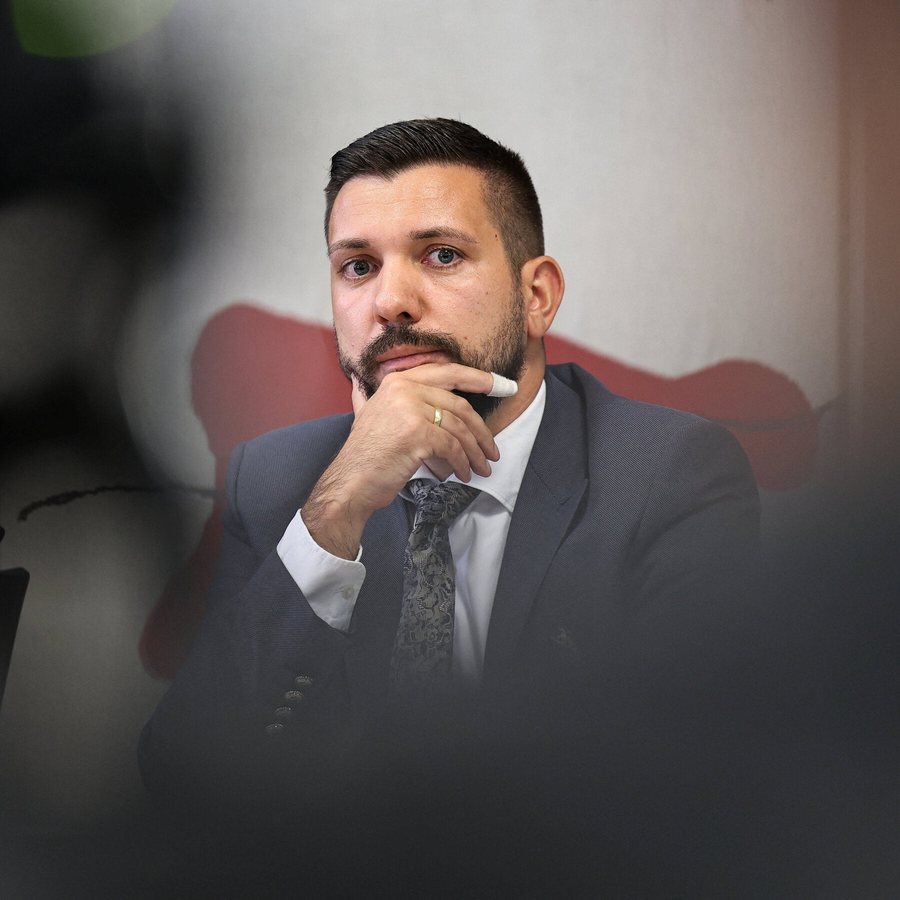
Tobias Rausch of the Alternative for Germany (AfD) has been elected speaker of the state parliament in Saxony-Anhalt, making him the first far-right politician to lead a German statehouse since 1945. The vote, held in the state capital Magdeburg, marks a significant milestone for the party as it consolidates its presence in eastern Germany.
The AfD has been the strongest party in Saxony-Anhalt since the 2021 state election, but had previously been unable to secure the speaker's chair because other parties refused to support its candidate. This time, Rausch secured the required majority, a development that underscores the party's growing influence in the region and its ability to attract support from other factions.
The election of a far-right speaker is a symbolic moment for Germany, where the AfD has been under observation by domestic intelligence services in several states. The party's rise has prompted widespread debate about the resilience of the country's democratic institutions and the willingness of mainstream parties to cooperate with it.
Saxony-Anhalt, a state in eastern Germany, has been a stronghold for the AfD, which has capitalised on voter discontent over issues including migration, energy policy and the economic legacy of reunification. The party's success in the state reflects a broader trend in eastern Germany, where it has consistently polled strongly and now holds a number of parliamentary leadership positions.
The speaker's role is largely procedural, involving the chairing of parliamentary sessions and the maintenance of order, but it carries significant symbolic weight. Rausch's election is likely to be seen as a further normalisation of the far right in German politics, a prospect that has alarmed Jewish groups and other civil society organisations.
Other parties in the state parliament had previously blocked AfD candidates for the speaker's post, citing the party's extremist ties. The decision to allow Rausch to take the chair may signal a shift in strategy, or it may simply reflect the arithmetic of the parliament, where the AfD holds the largest number of seats.
The election has drawn attention from national and international media, with many commentators noting that it is the first time since the end of the Second World War that a far-right politician has led a German state parliament. The AfD itself has described the outcome as a democratic mandate, while critics warn that it represents a dangerous erosion of the political centre.
Rausch, who has been a member of the state parliament since 2021, is expected to take up his duties immediately. His election is likely to be challenged by other parties, but the procedural rules of the statehouse give the speaker considerable authority over the conduct of business.
The development comes amid heightened scrutiny of the AfD's activities across Germany. The party has been classified as a suspected extremist organisation by the federal domestic intelligence agency, a designation that allows for increased surveillance. Its leaders have repeatedly rejected the label, arguing that it is a political tool used to discredit them.
For Dominicans and other observers in the Caribbean, the news is a reminder of the fragility of democratic norms and the importance of vigilance in protecting them. The Commonwealth of Dominica has its own strong tradition of parliamentary democracy, and the events in Saxony-Anhalt serve as a distant but instructive example of how political landscapes can shift.
The election of a far-right speaker in a German statehouse is a rare event, and its implications will be watched closely in Berlin and beyond. Whether it marks a permanent change in German politics or a temporary aberration remains to be seen.
5