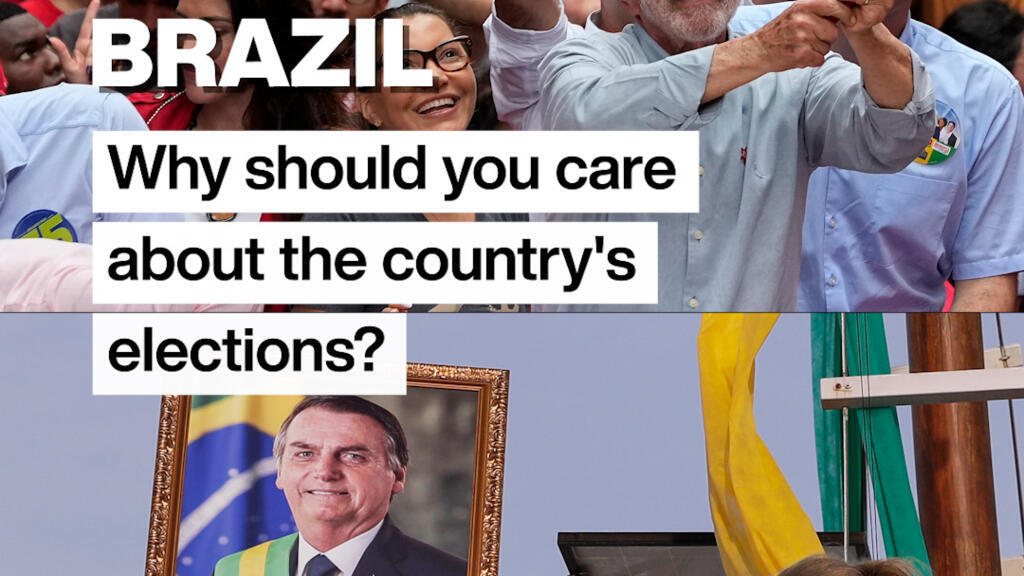
Brazil's presidential election will be settled in a second round on October 25 after Flávio Bolsonaro, the son of former president Jair Bolsonaro, won the first round against incumbent President Luiz Inácio Lula da Silva by a margin of just over two million votes.
The result has upended expectations in South America's largest country and sets up a runoff that could reshape the political landscape of Latin America. The first round, held in October, produced a clear lead for Flávio Bolsonaro but not the outright majority needed to avoid a second ballot, leaving the presidency to be decided by voters who backed other candidates.
For Dominica and the wider Caribbean, the outcome carries weight beyond Brazil's borders. Brazil is a major voice in hemispheric affairs and a significant partner in trade, climate diplomacy and regional institutions. A change of government in Brasília would alter the tone of Latin American engagement with the Caribbean Community and with small island states pressing for climate finance and debt relief.
The runoff also marks a remarkable political turn for the Bolsonaro family. Jair Bolsonaro, who served as president from 2019 to 2022, lost the 2022 election to Lula da Silva. His son's first-round victory now places the family name back at the centre of Brazilian politics, with the incumbent president fighting to hold on to office.
Lula da Silva, who returned to the presidency in 2023, had been widely expected to contest the runoff from a stronger position. The first-round deficit of more than two million votes means his campaign must now attract supporters of eliminated candidates and mobilise voters who stayed away from the polls.
The second round is scheduled for October 25. Brazilian election law provides for a runoff when no candidate secures more than half of the valid votes in the first round, and the contest will be decided on that single day.
Analysts across the region will be watching closely. Brazil's foreign policy under Lula da Silva has emphasised South American integration and engagement with multilateral bodies, while a Bolsonaro-led administration would be expected to shift priorities. For Caribbean governments, the practical questions concern trade arrangements, climate negotiations and the direction of regional cooperation.
The campaign now enters its final phase, with both candidates seeking to consolidate support. The result of the first round gives Flávio Bolsonaro the momentum, but the runoff electorate is different, and the incumbent president retains the advantages of office.
Brazil's election is one of the most closely followed in the hemisphere this year, and the October 25 vote will determine who leads the country for the next term. The outcome will be felt from Roseau to Brasília, in the councils of CARICOM and in the wider conversation about the future of Latin America and the Caribbean.
3