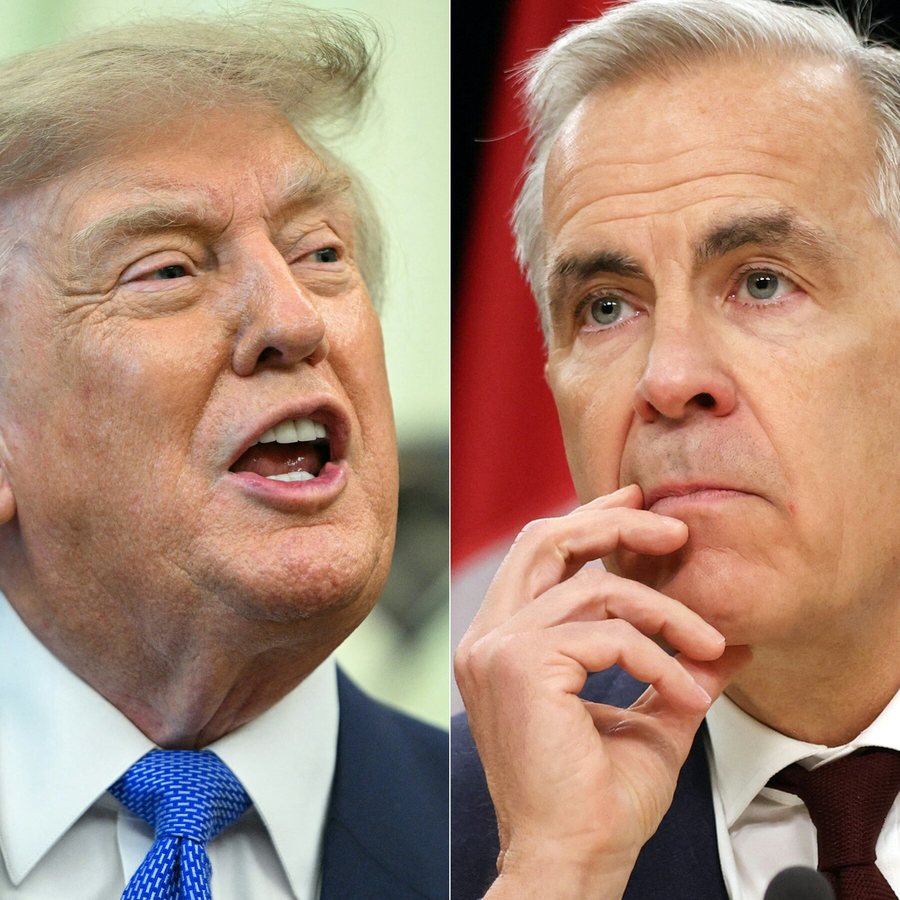
The United States and Canada are once again locked in a tense exchange over trade, with President Donald Trump and Prime Minister Mark Carney at odds over tariffs and economic policy. The renewed friction marks another chapter in the often volatile relationship between the two neighbours, which has swung between cooperation and confrontation throughout the year.
The latest dispute centres on Washington's tariff measures and Ottawa's response, a pattern that has become familiar since the Trump administration began its aggressive trade posture. Canadian officials have signalled they will not back down, insisting that any action against Canadian goods will be met with proportionate countermeasures designed to protect domestic industries and workers.
Prime Minister Carney, who has made economic resilience a cornerstone of his government, has framed the dispute as a matter of national interest. His administration has stressed the importance of standing firm while keeping channels of communication open, a balancing act that has defined Canadian strategy in previous rounds of the trade conflict.
The timing is significant. Both leaders face domestic pressures that make the trade file particularly sensitive. In Washington, the president has continued to champion tariffs as a tool to reshape American manufacturing and reduce reliance on foreign goods. In Ottawa, the prime minister must navigate the concerns of provinces and sectors that depend heavily on cross-border commerce, from agriculture and energy to automotive manufacturing.
Business groups on both sides of the border have watched the developments with growing unease. Industry associations in Canada have urged the federal government to pursue a negotiated settlement, warning that prolonged uncertainty could deter investment and disrupt supply chains that have been integrated for decades. American businesses have expressed similar concerns, noting that many U.S. companies rely on Canadian inputs and that retaliatory tariffs could raise costs for consumers.
The dispute also carries political weight. Opposition parties in Canada have criticised the government's handling of the file, with some arguing that Ottawa has been too confrontational and others insisting it has not been firm enough. The government has defended its approach, pointing to its efforts to diversify trade partnerships and reduce dependence on any single market.
Analysts note that the relationship between the two countries has weathered significant storms before, from disputes over softwood lumber and dairy to the renegotiation of the North American free trade agreement. Each time, officials have ultimately found a way to manage the tensions, though not without cost and disruption.
For now, the immediate outlook remains uncertain. Neither side has signalled a willingness to back down, and the coming weeks could bring further escalation or a renewed push for dialogue. What is clear is that the trade relationship between the United States and Canada, one of the largest in the world, remains a work in progress, shaped as much by politics as by economics.
Observers in the Caribbean and beyond will be watching closely. The outcome of this dispute could have ripple effects far beyond North America, influencing trade dynamics and diplomatic relations across the hemisphere.
48