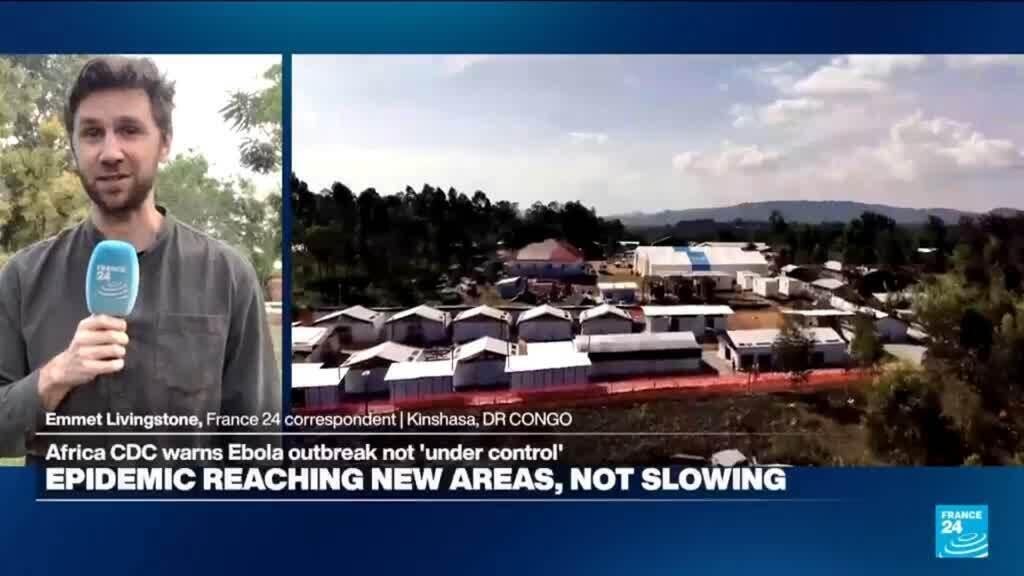
Health experts and frontline responders are challenging the Congolese government's assertion that the Ebola outbreak in the Democratic Republic of Congo has turned a corner, saying the virus continues to spread into new areas and that the situation remains as grave as ever.
The government has publicly claimed that the outbreak has changed course, with cases trending downwards in known hotspots. But that interpretation is being met with pushback from health experts and responders on the ground, who warn that the outbreak is far from contained and is reaching communities that had previously been unaffected.
The discrepancy between official statements and the assessment of medical personnel raises concerns about the accuracy of public messaging and the effectiveness of the response. Health workers say the outbreak remains as bad as ever, with new infections continuing to emerge in areas beyond the original epicentres.
The Democratic Republic of Congo has extensive experience with Ebola, having faced multiple outbreaks since the virus was first identified in the country in 1976. The current outbreak has required a large-scale response involving national health authorities, international organisations and local responders. The spread to new areas complicates containment efforts, as it demands additional resources, contact tracing and community engagement in regions that may lack prior experience with the disease.
Ebola is a severe and often fatal illness transmitted through direct contact with the blood, secretions, organs or other bodily fluids of infected people, and with surfaces and materials contaminated with these fluids. Outbreaks require rapid isolation of patients, safe burials and rigorous infection control to break the chain of transmission. The emergence of cases in new locations suggests gaps in surveillance or delays in detecting and isolating patients.
The pushback from experts highlights the tension that can arise between governments seeking to project control and health professionals focused on the realities on the ground. Accurate and transparent reporting is critical to mobilising resources and maintaining public trust, which are essential to ending an outbreak.
For Dominicans, the development is a reminder of the importance of robust public health systems and early warning mechanisms. While the Commonwealth of Dominica is far from the affected region, the global nature of infectious disease means that outbreaks anywhere are a concern everywhere. The Office of Disaster Management and the Dominica Meteorological Service regularly stress preparedness for natural hazards, and the same principle of vigilance applies to health threats.
The World Health Organization has not yet issued a new assessment of the outbreak's trajectory. Health responders continue to call for sustained international support to bring the outbreak under control, warning that any premature declaration of victory could lead to a resurgence.