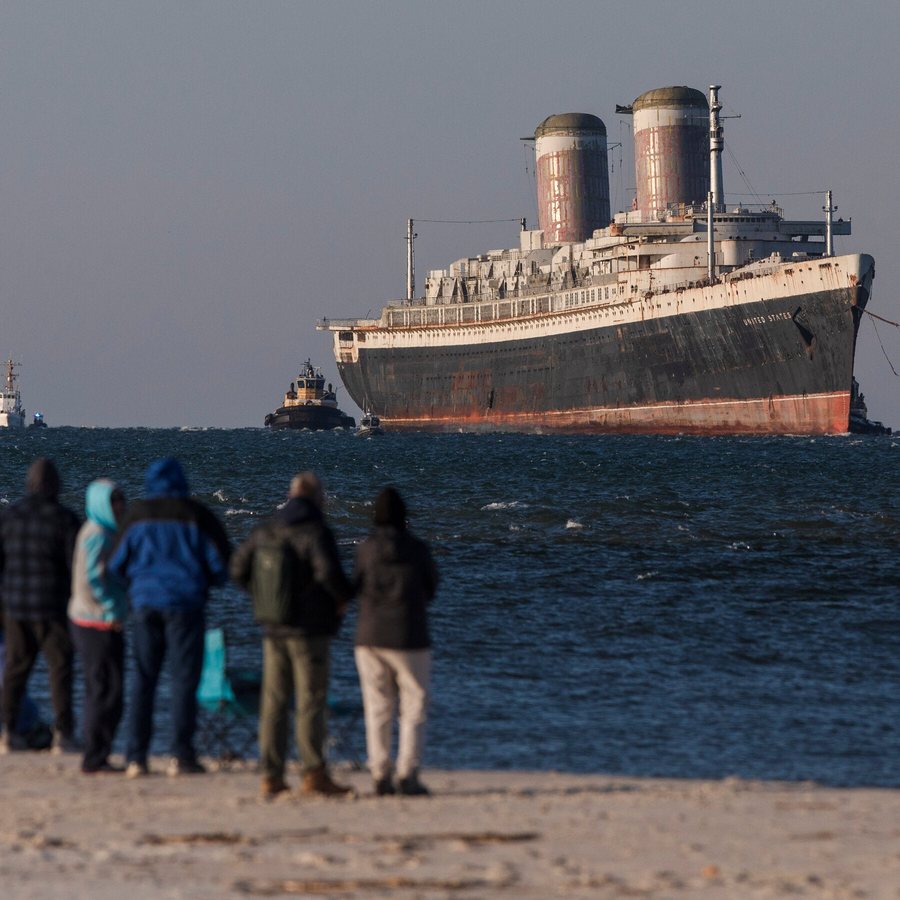
The S.S. United States, the historic ocean liner once celebrated as a symbol of American maritime prowess, is heading to the ocean floor off the coast of Florida, where it will become an artificial reef. The decision ends long-running efforts to preserve the vessel in a lasting form.
Built in the 20th century, the ship was known for its speed, its luxury and its near-indestructible construction. For decades it stood among the most admired vessels to cross the Atlantic, a showcase of American engineering on the water. That reputation is the reason its fate has drawn attention, since few ships of its era carried the same national significance.
Preservation attempts did not succeed. Cost and funding remained the central obstacles, and the effort to keep the ship afloat and intact could not be sustained. Sinking the vessel in a controlled way, so that it serves a new purpose as an artificial reef, is the outcome that replaces those plans. Once the hull settles on the seabed, it will no longer be a candidate for restoration, dry-dock display or a working role at sea.
Artificial reefs built from decommissioned vessels give marine life a hard structure on which to settle. Such wrecks can attract fish and other species to stretches of seabed that would otherwise be largely featureless, creating habitat that grows over time as coral and other organisms colonise the steel. In this case the ship's final role will be ecological rather than as a museum or a liner.
The reporting available here does not give full details of the sinking method or its exact timing, and those specifics are not confirmed in this account. What is clear is that the S.S. United States, once a pride of the American merchant fleet, will end its story on the seabed rather than in a harbour or on public display. The source article was published on November 11, 2026, and it frames the sinking as the close of a chapter that many maritime enthusiasts had hoped would be different.
6