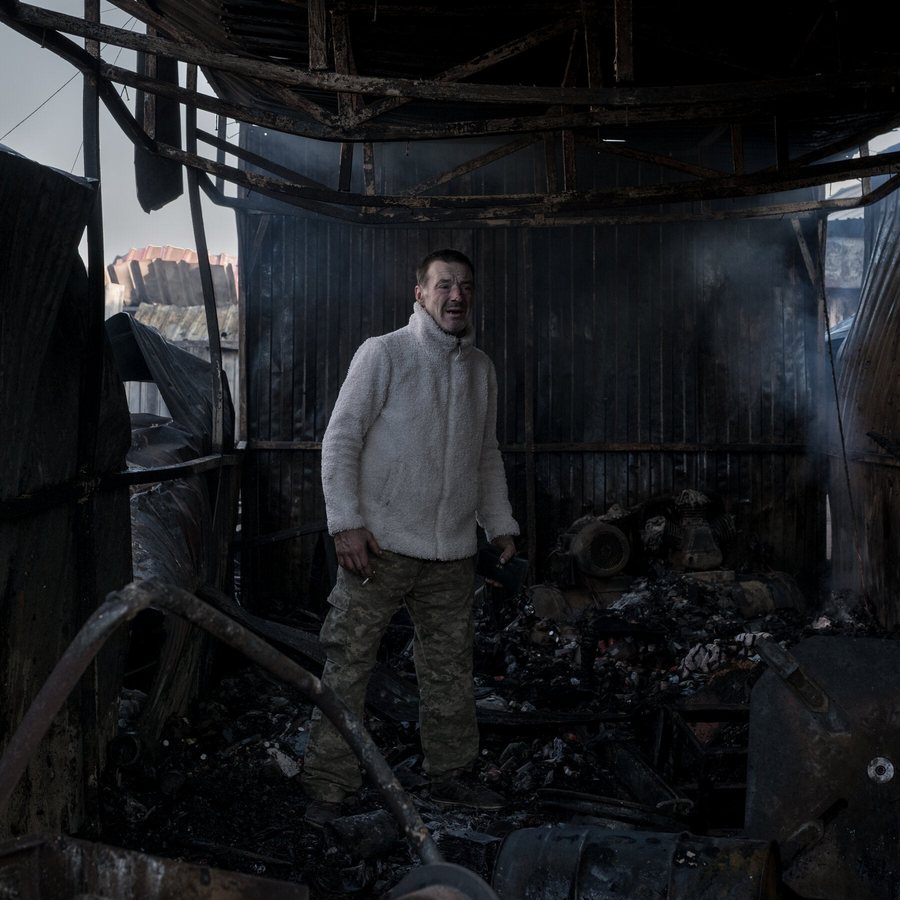
Russian strikes on Kyiv are continuing to kill civilians and damage civilian infrastructure, with an attack on an industrial complex in the Ukrainian capital on October 7 leaving two security guards dead and a garage destroyed. The assault is part of a sustained campaign that has made life increasingly precarious for the city's residents as another wartime winter approaches.
The strike on the industrial site is the latest in a series of attacks that have targeted Kyiv's urban fabric, disrupting daily routines and forcing residents to adapt to the constant threat of bombardment. The two security guards killed were among the many civilians who have died in a war that has now stretched across multiple years, with the capital remaining a primary target of Russian missile and drone assaults.
Life in Kyiv has been transformed by the war. Air raid sirens sound at all hours, sending residents to shelters or into interior corridors. Power cuts, whether from direct strikes on the energy grid or from emergency shutdowns, have become a regular feature of daily life. Schools operate with contingency plans, and many workplaces have moved partly or wholly underground or online. The psychological toll is evident in a population that has learned to carry on amid uncertainty.
The October 7 attack on the industrial complex is a reminder that the danger is not confined to the front lines, which lie hundreds of kilometres to the east and south. Kyiv, a city of some three million people before the war, remains a functioning capital, but its normal rhythms are constantly interrupted by the need to respond to attacks and to repair what has been damaged.
As winter approaches, the challenges intensify. Cold weather increases the demand for heating and electricity, precisely when infrastructure is most vulnerable to strikes. Previous winters have seen Russia target energy facilities in an apparent effort to deprive civilians of heat and light, a strategy that Ukrainian officials and Western governments have described as an attempt to make the country unlivable.
Residents have responded with a mixture of resilience and exhaustion. Many have invested in generators, wood-burning stoves, and stockpiles of food and water. Community networks have formed to share resources and information. Yet the cumulative effect of nearly constant alertness is heavy, and the departure of some residents — particularly women, children, and the elderly — has left a city with a changed demographic profile.
The Ukrainian government has continued to function from Kyiv, and international diplomatic activity has persisted despite the security risks. But the war's presence is inescapable, from the sandbags and anti-tank obstacles that remain in some central areas to the military checkpoints on the approaches to the city.
The October 7 strike is unlikely to be the last. Russia has shown no sign of abandoning its campaign against Ukrainian cities, and Kyiv remains within range of multiple weapons systems. For the people who live there, the task is to endure, to rebuild what is broken, and to maintain some semblance of ordinary life in extraordinary circumstances.
As the war continues, the international community watches a capital that refuses to be broken. The two security guards killed on October 7 join a long list of civilians whose lives have been cut short. Their deaths, and the destroyed garage that marks the site of the attack, are part of a broader story of a city under siege — not encircled by troops, but subjected to a persistent, grinding pressure that aims to make life impossible.
For now, Kyiv endures. Its people go to work, send their children to school where possible, and prepare for the cold months ahead. The war has not stopped them, but it has scarred them, and the coming winter will test their resolve once more.
1