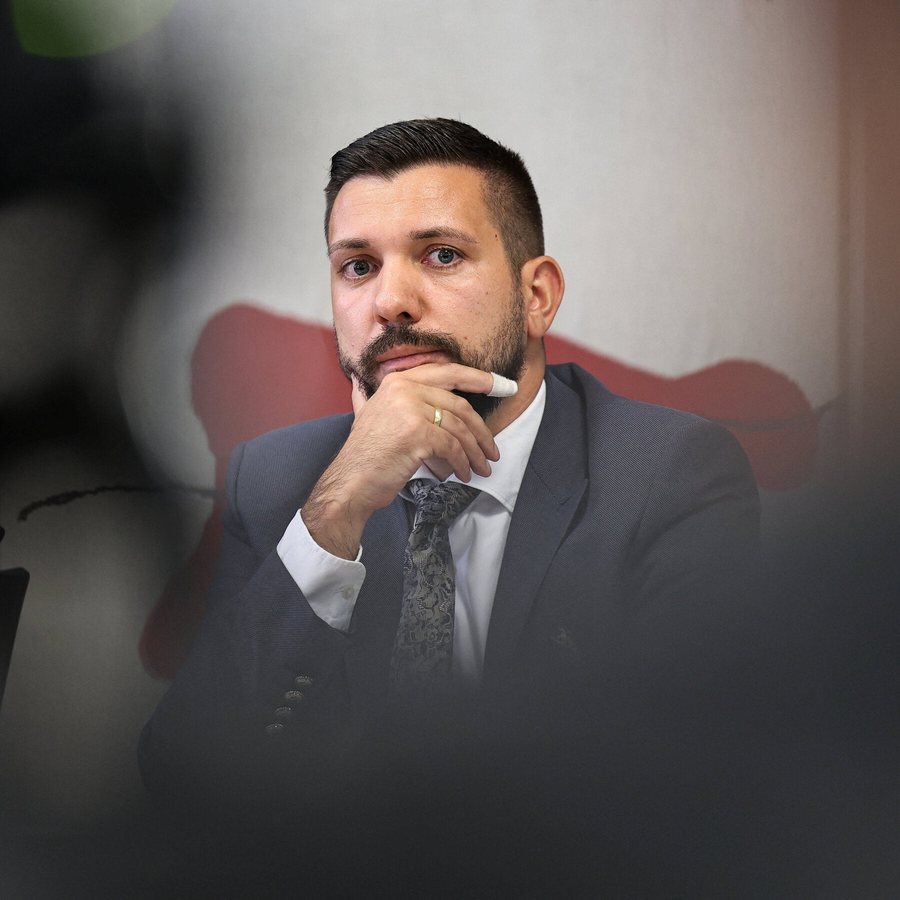
The 2026 Nobel Prize in Physics has been awarded to Francis Halzen, a Belgian particle physicist at the University of Wisconsin-Madison, for his pioneering work on neutrinos and the IceCube detector at the South Pole. The Royal Swedish Academy of Sciences announced the award in Stockholm, recognising Halzen's contributions to the study of these ghost-like particles that pass through matter almost undetected.
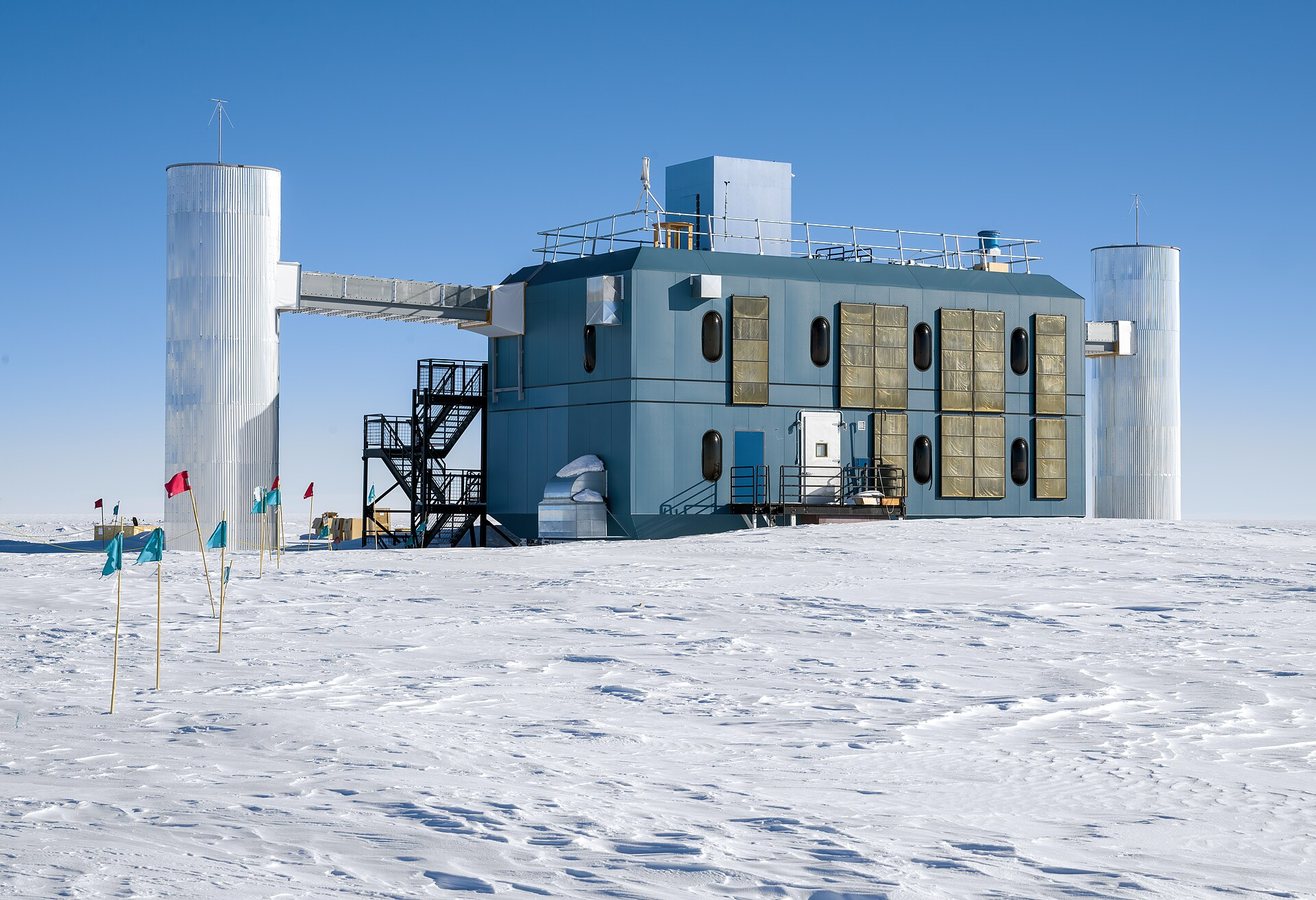
Halzen, who has spent decades researching the fundamental properties of neutrinos, led the development of the IceCube Neutrino Observatory, a massive detector buried deep in the Antarctic ice. The facility, which spans a cubic kilometre, is designed to capture the faint flashes of light produced when neutrinos interact with ice molecules. These interactions are extremely rare, making the detector's scale and sensitivity essential to advancing our understanding of the universe.
The prize, worth 12 million Swedish kronor (approximately £900,000), is one of the most prestigious awards in science. The Royal Swedish Academy of Sciences cited Halzen's work as transformative, noting that the IceCube detector has opened a new window on the cosmos, allowing scientists to observe high-energy neutrinos from distant astrophysical sources such as supernovae and active galactic nuclei.
Neutrinos are often described as ghost particles because they rarely interact with other matter, passing through the Earth and everything on it by the billions every second without leaving a trace. Detecting them requires enormous, highly sensitive instruments like IceCube, which uses thousands of optical sensors embedded in the Antarctic ice to catch the fleeting signals of neutrino collisions.
Halzen's career has been closely tied to the IceCube project since its inception in the 1990s. He served as the principal investigator and was instrumental in securing international collaboration and funding for the observatory, which involves researchers from dozens of institutions worldwide. The detector began full operation in 2010 and has since produced groundbreaking results, including the first observation of high-energy astrophysical neutrinos in 2013.
The award highlights the growing importance of neutrino astronomy, a field that combines particle physics and astrophysics to probe some of the most energetic phenomena in the universe. Unlike light, which can be absorbed or scattered by dust and gas, neutrinos travel vast distances unimpeded, carrying information about their origins that would otherwise be lost.
Halzen's recognition also brings attention to the broader scientific community's efforts to understand dark matter, the Big Bang, and the fundamental forces of nature. The IceCube observatory continues to operate and is slated for an upgrade, IceCube-Gen2, which will expand its volume tenfold and increase its sensitivity to neutrino sources.
The Nobel Prize in Physics is awarded annually by the Royal Swedish Academy of Sciences. Past laureates include Albert Einstein, Marie Curie, and more recently, scientists recognised for their work on black holes, gravitational waves, and climate modelling. Halzen joins this distinguished list for his contributions to particle astrophysics.
In Dominica, where science education and research are growing priorities, Halzen's achievement serves as an inspiration to students and researchers in the Caribbean and beyond. The award underscores the value of international collaboration and long-term investment in fundamental science, principles that resonate with small island developing states seeking to build knowledge economies.
The Nobel Prize ceremony will take place in Stockholm on 10 December, the anniversary of Alfred Nobel's death. Halzen is expected to receive his medal and diploma alongside other laureates in physics, chemistry, medicine, literature, and peace.
5