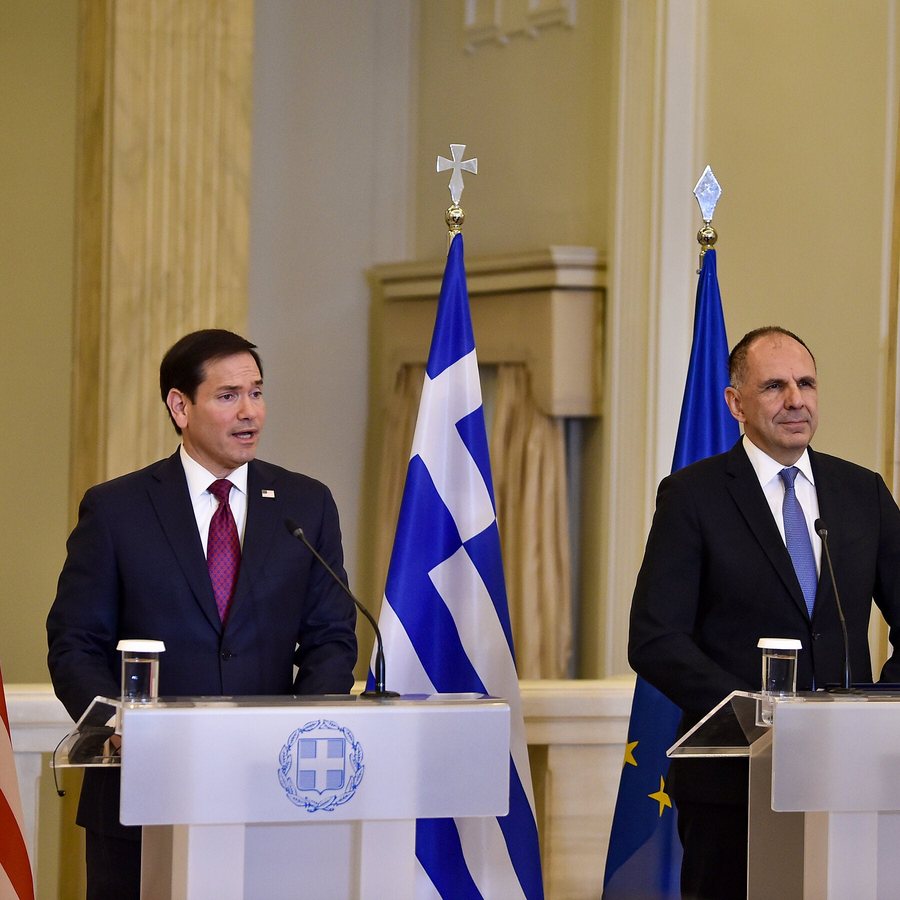
United States Secretary of State Marco Rubio has issued a stark warning to European allies, saying the continent faces a future of «atrophy, servitude and decline» unless it confronts falling birth rates, shrinking defence budgets and a loss of industrial capacity. Rubio made the remarks during a visit to Athens, where he met Greek Foreign Minister Giorgos Gerapetritis for talks expected to cover defence cooperation, migration and regional security.
According to Rubio, Europe's demographic trajectory is the root of the problem. He argued that without a reversal in population trends, European nations will struggle to sustain the economies and armed forces needed to protect their own interests. The warning reflects a long-standing concern in Washington that many NATO members rely too heavily on American military power while cutting their own defence spending.
Rubio's language was unusually blunt for a diplomatic visit. By pairing «servitude» with «decline», he suggested that Europe's choices are not merely economic but strategic: either invest in defence, industry and families, or accept a diminished role in global affairs. The remarks come as the war in Ukraine continues to test European military stockpiles and as debates over migration and labour shortages dominate politics in several EU capitals.
Greece, where Rubio spoke, sits at the intersection of several of these pressures. The country has one of the lowest birth rates in Europe, has been a frontline state for migration from the Middle East and Africa, and has steadily increased defence spending in recent years amid tensions in the eastern Mediterranean. Athens has also been a key transit point for US military logistics and a partner in NATO's eastern flank strategy.
The meeting with Gerapetritis was expected to touch on defence procurement, energy cooperation and the situation in the wider region, including the Middle East and the Balkans. Rubio's public message, however, focused on what he sees as Europe's internal weaknesses rather than on specific bilateral deals.
His comments are likely to be received differently across the continent. Some European officials have themselves warned about the consequences of ageing populations and underinvestment in defence, while others resent American lecturing on domestic social policy. The phrase «atrophy, servitude and decline» is likely to be quoted by both critics and supporters of closer transatlantic coordination.
For the Caribbean, the significance lies in the wider direction of US foreign policy. A Washington that presses Europe to do more for its own defence may also expect smaller partners in the Americas to take on more responsibility for regional security, migration management and economic resilience. Dominica and its OECS neighbours already navigate a world in which great-power attention is unevenly distributed, and shifts in US priorities can affect everything from development assistance to climate finance.
Rubio did not announce new military deployments or aid packages during the Athens stop, and no joint statement detailing new commitments was released. The visit nonetheless served as a platform for a message that the Trump administration's top diplomat wants European capitals to hear clearly: the status quo is not sustainable.
Whether that message translates into changed budgets and policies in Europe will become clearer in the months ahead, as NATO members prepare spending plans and as migration and demographic debates continue to shape elections across the continent. For now, Rubio's words stand as one of the sharper American warnings to Europe in recent memory.
2