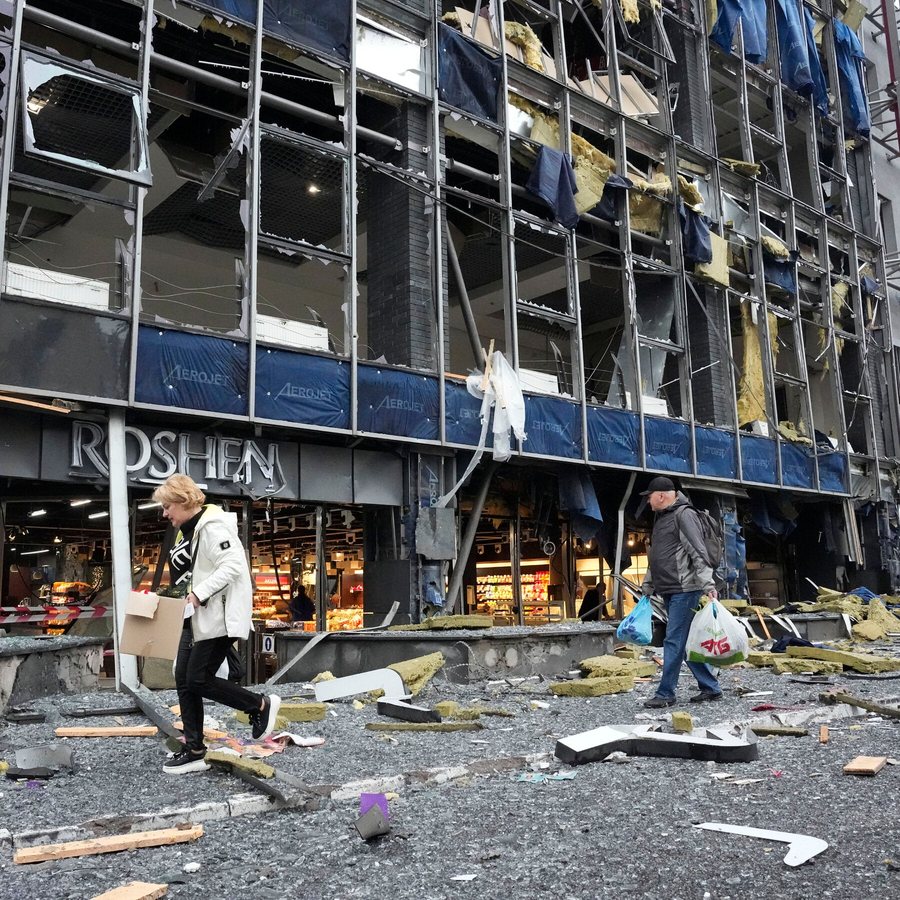
A Russian drone attack has struck the head office of Ukraine's SBU intelligence agency in the heart of Kyiv, sending plumes of black smoke rising into the air over the capital. The strike on the security service headquarters marks a significant escalation in the conflict, drawing an immediate pledge of retaliation from Ukraine's leadership.
President Volodymyr Zelenskyy said he had instructed the SBU to deliver an «appropriate, tangible response» to the attack. Foreign Minister Andrii Sybiha described the strike as a «major escalation», underscoring the seriousness with which Ukrainian officials view the targeting of the country's principal intelligence and security apparatus.
The attack occurred in a central district of Kyiv, where the SBU maintains its main administrative complex. Witnesses reported thick black smoke billowing from the site shortly after the drone strike, with emergency services rushing to the scene. There was no immediate official word on casualties, though the symbolism of striking the SBU headquarters in the capital is unlikely to be lost on either side of the conflict.
The SBU, Ukraine's successor to the Soviet-era KGB, is responsible for state security, counter-intelligence and counter-terrorism operations. It has played a central role in the war effort since the full-scale Russian invasion began, coordinating intelligence gathering, sabotage operations behind enemy lines and the protection of critical state infrastructure. Targeting its headquarters in Kyiv is a direct challenge to the nerve centre of Ukraine's security establishment.
Zelenskyy's public instruction to the SBU to prepare a tangible response signals that Ukraine does not intend to absorb the strike without retaliation. The president has consistently framed such attacks as attempts to break Ukrainian resolve, and his response is likely to be watched closely both domestically and by international partners.
The strike comes amid an ongoing pattern of Russian aerial assaults on Ukrainian cities, which have frequently targeted energy infrastructure, military installations and government buildings. Kyiv has been subjected to repeated drone and missile barrages throughout the conflict, with air defence systems regularly engaged in intercepting incoming threats. The successful strike on the SBU headquarters suggests a gap in those defences, at least on this occasion.
International reaction to the attack is expected to be swift, with Ukraine's allies having repeatedly condemned strikes on state institutions and civilian infrastructure. The designation of the attack as a «major escalation» by Ukraine's foreign minister may also carry weight in diplomatic circles, where the language of escalation is often used to signal the need for increased support or tougher sanctions against Moscow.
For residents of Kyiv, the attack is a stark reminder that the war continues to reach the capital despite months of grinding frontline battles in the east and south. The sight of smoke over central Kyiv is likely to heighten concerns about the safety of the city, which has served as a symbol of Ukrainian resistance since the early days of the invasion.
As the SBU assesses the damage and Ukraine's leadership weighs its next move, the strike on the intelligence headquarters stands as one of the most direct attacks on the heart of the Ukrainian state in recent months. The promised response from Zelenskyy and the SBU will determine whether this incident becomes a flashpoint for further escalation or a moment of calculated retaliation.
51