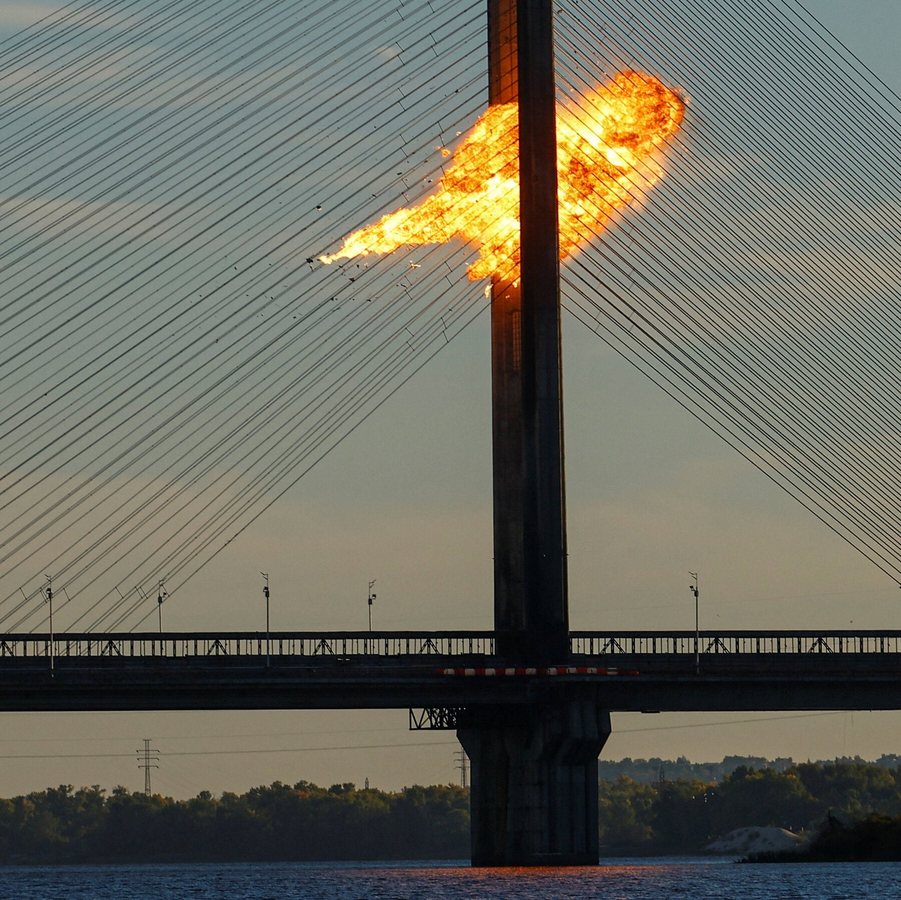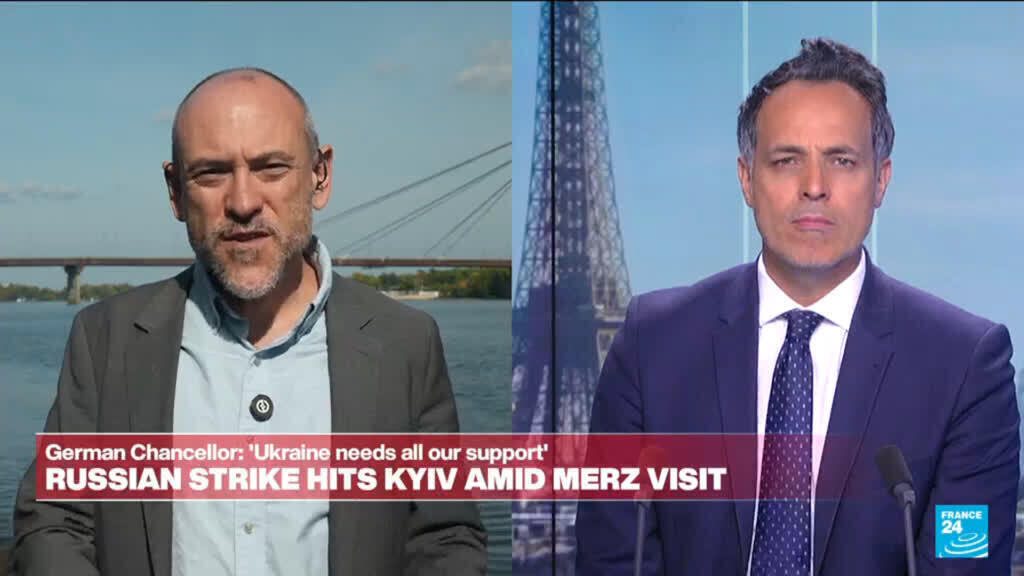
A Russian strike has damaged a bridge in Kyiv while German Chancellor Friedrich Merz was visiting the Ukrainian capital, in an attack that underscored the continuing threat to Ukraine's infrastructure even as international support is reaffirmed.
The strike targeted one of the bridges crossing the Dnipro River in Kyiv. Video footage from the scene showed a large hole in the roadway, but traffic has since resumed on the bridge, albeit slowly, according to reporting from the Ukrainian capital.
Chancellor Merz's visit was not previously announced and was intended to demonstrate Germany's backing for Ukraine. His presence in Kyiv at the time of the strike highlighted the risks facing foreign leaders who travel to the country to show solidarity.
Experts note that Kyiv's bridges are extremely solid structures, engineered to withstand significant damage, and are difficult to destroy even with ballistic missiles. The strike nevertheless caused visible damage and briefly disrupted traffic across the span.
The attack is part of a pattern of Russian strikes on Ukrainian infrastructure. Moscow has previously targeted bridges and other key transport links in and around the capital, aiming to disrupt civilian life and military logistics.
No immediate details were available on casualties or the full extent of the damage. The resumption of traffic, even at reduced speed, suggested the bridge remained structurally usable, but authorities are expected to carry out further inspections.
The strike came as Chancellor Merz was in Kyiv to reaffirm Germany's support for Ukraine. His unannounced visit was meant to signal continued backing at a time when the war continues to exact a heavy toll on Ukrainian cities and infrastructure.
Ukraine's air defences have been reinforced by Western supplies, but Russian forces continue to launch missile and drone attacks that sometimes penetrate those defences. The strike on the bridge is the latest example of the challenges facing Ukrainian authorities as they try to protect critical infrastructure.
For residents of Kyiv, the attack served as a reminder that the war is far from over, even as diplomatic visits and international meetings continue. The bridge, a vital artery for the capital, was quickly reopened to traffic, but the hole in the roadway remained visible as a mark of the strike.
Germany has been one of Ukraine's key supporters since the start of the full-scale invasion, providing military and financial aid. Chancellor Merz's visit was intended to reinforce that commitment and to discuss further assistance.
The strike also raised questions about the effectiveness of air defences in protecting key infrastructure. While many incoming projectiles are intercepted, some still get through, causing damage and disruption.
Ukrainian officials have repeatedly called on allies to supply more air defence systems and long-range weapons to counter Russian attacks. The bridge strike is likely to add urgency to those appeals.
As traffic resumed slowly across the damaged bridge, the focus remained on assessing the damage and ensuring the safety of the structure. The visit by Chancellor Merz continued, with discussions expected on further support for Ukraine's defence and recovery efforts.
2