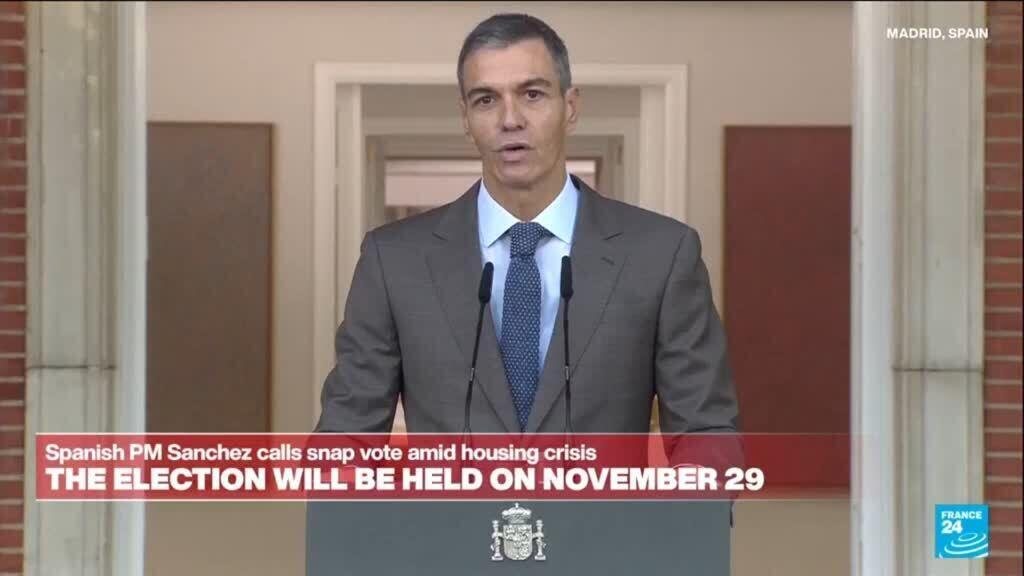
Spanish Prime Minister Pedro Sánchez has called a snap general election for 29 November, seeking a fresh mandate after a fragmented parliament rejected his government's central housing decrees last week amid widespread protests over the cost of housing.
The decision follows a parliamentary defeat on housing legislation that the government had presented as a priority. With no stable majority able to carry the measures through the Cortes, Sánchez has chosen to dissolve the deadlock and put the question back to voters rather than attempt to govern without the decrees.
The housing question has become the sharpest point of contention in Spanish politics. Rents and purchase prices have risen steeply in Madrid, Barcelona and other urban centres, and demonstrations have drawn large crowds demanding action on affordability and security of tenure. The rejected decrees were the government's principal answer to those demands.
By calling the election early, Sánchez is asking voters to strengthen his hand. The current parliament is divided among several parties, and the government has found it difficult to assemble majorities for its legislative programme. The housing votes exposed how narrow that path had become.
An election on 29 November will now test whether the public backs the government's approach or prefers a different direction on housing and the wider cost of living. Campaigning is expected to centre heavily on housing policy, alongside the economy and the management of Spain's regions.
The result will also shape Spain's position within the European Union at a time when member states are grappling with housing affordability and social discontent. For the Caribbean, the outcome matters chiefly through the wider European economic climate and the policies that flow from Brussels, which influence trade, investment and tourism ties with the region.
For now, the government remains in office in a caretaker capacity until the vote. The housing decrees that triggered the crisis will not take effect in their rejected form, leaving the measures in limbo until a new parliament is seated and a government formed.
Sánchez's gamble is that voters will return a clearer mandate than the present chamber has given him. Opposition parties will argue that the collapse of the housing programme shows the government has lost its grip. Both sides will make their case over the coming weeks, with the housing crisis at the centre of the contest.
2