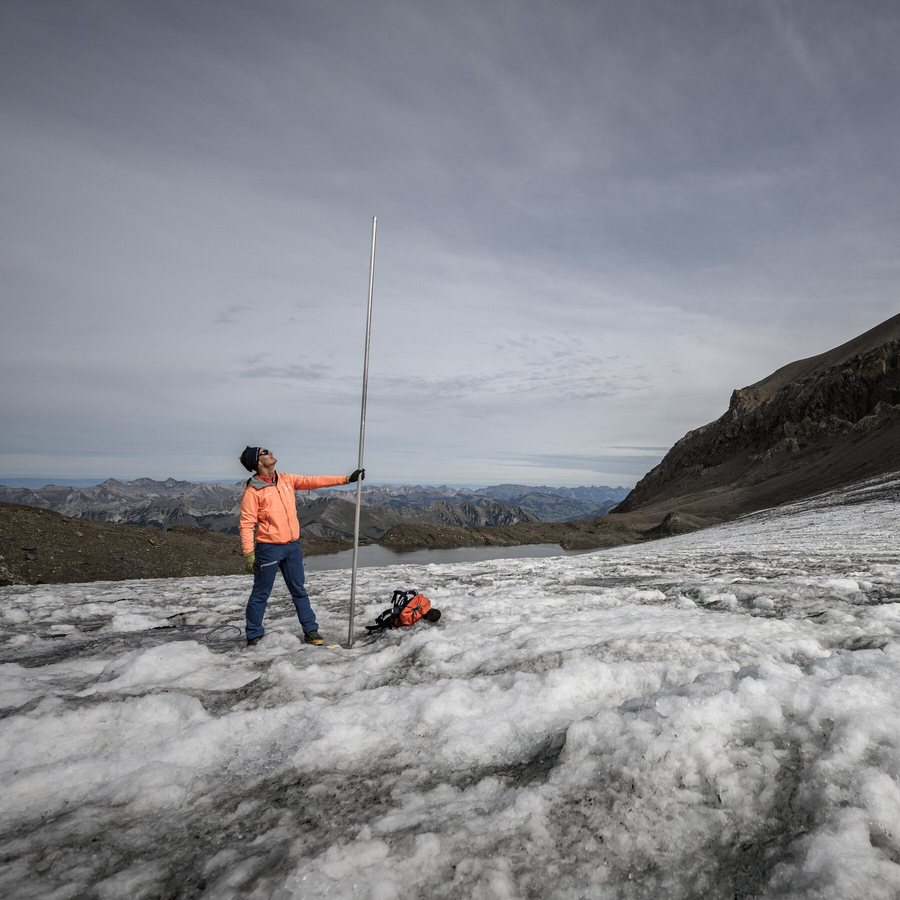
Switzerland's glaciers have lost nearly a fifth of their total volume in recent years, according to the Swiss Glacier Monitoring Network, which has been tracking the decline of the country's ice fields. The network's head, Matthias Huss, presented the findings at the Scex Rouge glacier, where a measuring pole showed the extent of melting over the past year.
The scale of the loss — close to 20 per cent of the total ice mass — represents one of the most rapid retreats recorded in the Alpine region. The Scex Rouge glacier, located in the western Swiss Alps, is among those that have been closely monitored as a reference site for the broader trend.
Scientists attribute the accelerating melt to rising temperatures, which have been particularly pronounced in mountain regions. The Swiss Glacier Monitoring Network has documented the changes through a combination of field measurements and long-term observations, with the data pointing to a consistent and steep decline.
The loss of glacier mass has significant implications for water supply, hydropower generation, and tourism in Switzerland and across the Alps. Glaciers act as natural reservoirs, releasing meltwater during dry summer months. A diminished ice volume threatens the reliability of these water sources for communities, agriculture, and industry.
For the Caribbean, the news carries a broader resonance. Small island developing states, including the Commonwealth of Dominica, are on the front lines of climate change, facing rising sea levels, more intense hurricanes, and changing rainfall patterns. While the Caribbean does not have glaciers, the same warming that is shrinking Alpine ice is driving the climate crisis that threatens the region's coastlines and ecosystems.
Dominica has consistently advocated for stronger global action on climate change, both within CARICOM and at international forums. The island's own experience with extreme weather — including the devastation of Hurricane Maria in 2017 — has made it a vocal voice for climate resilience and adaptation financing for small states.
The Swiss findings add to a growing body of evidence that the world's cryosphere is under severe pressure. Similar declines have been reported in the Himalayas, the Andes, and the Rockies. Scientists warn that without rapid reductions in greenhouse gas emissions, many glaciers could disappear entirely within decades, with far-reaching consequences for water availability and global sea levels.
The Swiss Glacier Monitoring Network continues to publish annual updates on the state of the country's glaciers. Its measurements serve as a key indicator of climate change impacts in Europe and are used by researchers worldwide to calibrate models of future ice loss.
For Dominicans and other Caribbean nationals, the story is a reminder that climate change is a global phenomenon with local consequences. The melting of distant glaciers contributes to sea-level rise that erodes beaches and threatens coastal infrastructure across the region. It also underscores the urgency of the calls made by small island states for climate justice and support for adaptation measures.
As the data from Switzerland shows, the pace of change is faster than many had anticipated. The near-fifth loss of glacier volume in just a few years is a stark illustration of how quickly the planet's frozen landscapes are responding to a warming climate.
3