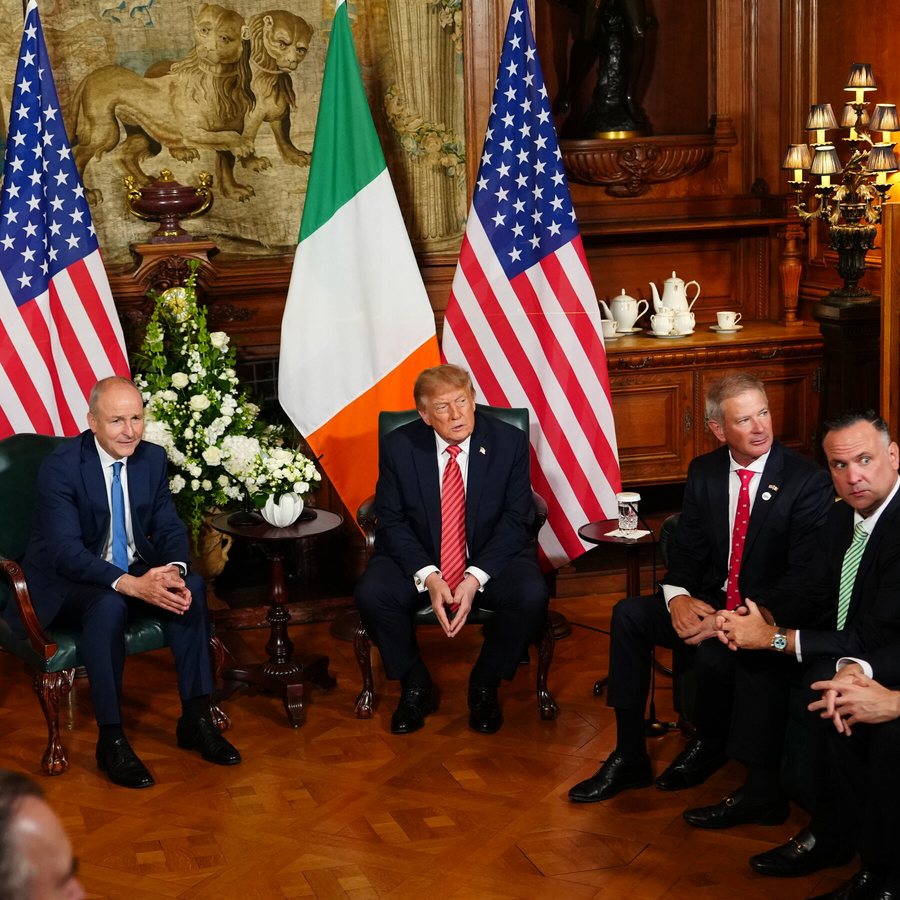
United States President Donald Trump has said that a united Ireland would be «fantastic», breaking with decades of American diplomatic precedent on the constitutional future of the island of Ireland.
The remark was made in Dublin on Saturday during a meeting with Taoiseach Micheál Martin at Farmleigh House, the State guest house in the Phoenix Park. Trump was in Ireland as part of a visit that included engagements in the capital.
Successive US administrations have traditionally avoided endorsing either side of the Irish unity question, respecting the principle of consent enshrined in the 1998 Good Friday Agreement. That agreement provides that any change to the constitutional status of Northern Ireland must be decided by the people of the island, north and south, through peaceful and democratic means.
Trump's comment therefore marks a departure from the careful language normally used by American presidents when addressing Irish affairs. The White House has not issued a formal statement clarifying whether the remark represents a shift in policy or a personal observation.
The Taoiseach's office did not immediately respond publicly to the characterisation of the comment. Irish officials have consistently stressed that the Good Friday Agreement remains the framework for any discussion of unity, and that the consent principle is not negotiable.
In Northern Ireland, the remark is likely to be scrutinised closely by unionist and nationalist parties alike. Unionists have long warned against external interference in the constitutional question, while nationalists have argued that demographic and political change makes a unity referendum increasingly likely.
The Irish government has pursued a policy of preparing for the possibility of a united Ireland through its Shared Island initiative, which funds cross-border projects and research. That work is framed as practical preparation rather than advocacy for a particular outcome.
Trump's visit to Dublin follows a period of intense engagement between Washington and European capitals. The US President has frequently made unscripted remarks during foreign trips that later required clarification from diplomats.
For Dominicans and the wider Caribbean diaspora, the episode is a reminder of how quickly statements by major powers can unsettle long-standing constitutional arrangements. The Caribbean has its own experience of referendums and constitutional change, and regional governments generally favour settled, rules-based processes.
The Good Friday Agreement was brokered with significant American involvement, including the role of former US Senator George Mitchell as chairman of the multi-party talks. That history gives Washington a recognised stake in Irish affairs, but also a tradition of restraint on the unity question.
It remains unclear whether Trump's remark will be followed by any change in US diplomatic posture. Irish officials are expected to seek further clarity in the coming days, while opposition parties in the Dáil may press the government on the implications of the comment.
For now, the Taoiseach has not publicly endorsed or rejected the President's language. The focus in Dublin will remain on maintaining the stability of the peace process and on ensuring that any discussion of unity proceeds within the agreed constitutional framework.
63