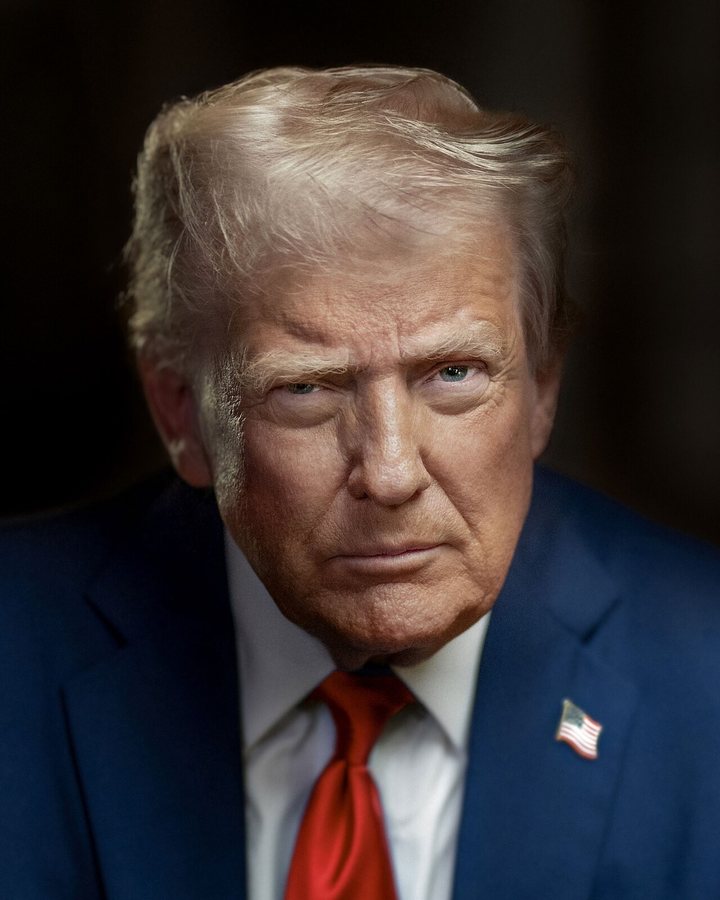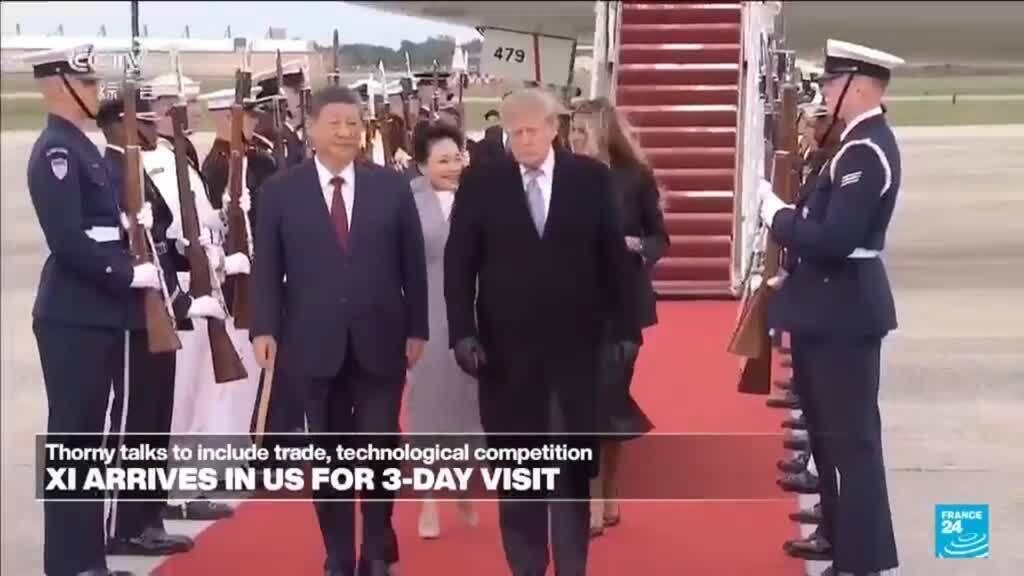
US President Donald Trump welcomed Chinese President Xi Jinping to Washington on Wednesday evening, greeting him on arrival at Joint Base Andrews ahead of a lavish state summit at the White House on Thursday.
The greeting marked the first time a US president has welcomed a foreign leader at the military airbase in 11 years, underscoring the symbolic weight both sides have placed on the visit.
The summit is expected to be heavy on symbolism but light on substance, with both leaders keen to showcase stable ties despite a deep underlying rivalry between the world's two largest economies.
Trump greeted Xi as he arrived, setting the tone for a programme that US officials have framed as a demonstration of steady engagement rather than a venue for major breakthroughs. The two leaders are scheduled to hold talks at the White House on Thursday.
Analysts have noted that the carefully choreographed welcome and the choice of Joint Base Andrews for the arrival reflect an effort to project normalcy and mutual respect at a time when differences over trade, technology and regional security remain unresolved.
For Caribbean observers, the meeting carries particular significance. The Commonwealth of Dominica and its OECS and CARICOM partners maintain diplomatic and economic ties with both Washington and Beijing, and shifts in the tone of US-China relations can influence development financing, climate cooperation and shipping costs across the region.
Dominica has benefited from Chinese infrastructure and agricultural support in recent years while also engaging the United States on security, disaster preparedness and diaspora matters. A stable US-China relationship is generally viewed in the region as reducing the risk of economic spillovers that hit small island states hardest.
Thursday's programme is expected to include a formal arrival ceremony, bilateral talks and a state dinner, according to the arrangements announced by both sides. Neither government has signalled that a joint statement or new agreements will emerge from the discussions.
Both leaders have reason to want the summit to be seen as a success. Trump has sought to present his administration as capable of managing great-power relations, while Xi has emphasised China's role as a stable global partner amid ongoing tensions over tariffs and export controls.
The underlying rivalry remains, however, and officials on both sides have played down expectations. The visit is being watched closely in capitals across the Caribbean, where governments balance relations with both powers and where any deterioration in US-China ties can quickly translate into higher import costs and tighter credit conditions.
For Dominica, the immediate impact is likely to be indirect. The island's trade is small in global terms, but its economy is sensitive to fuel prices, shipping rates and the availability of concessional financing — all of which can be affected by the direction of US-China relations.
The summit concludes on Thursday, with both leaders expected to depart Washington afterwards. No further meetings have been announced.
2