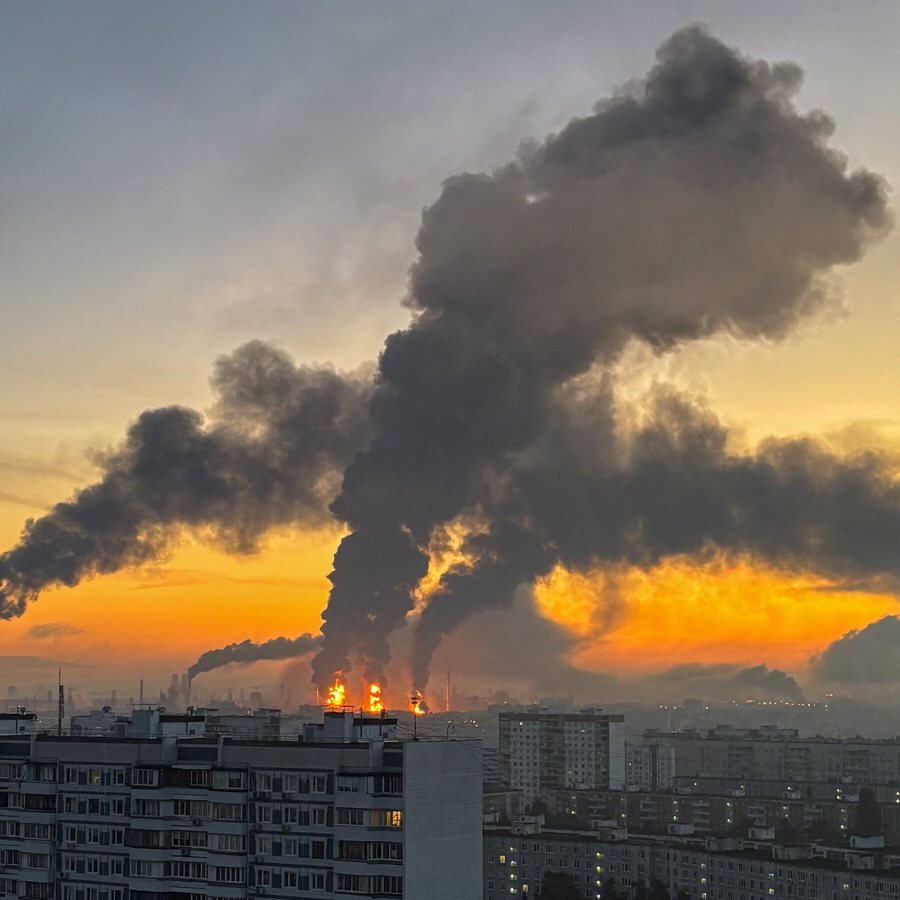
Ukraine has been steadily expanding its long-range drone campaign against Russia, striking targets far from the front line in a bid to turn Russia's enormous geographic scale into a vulnerability. The strikes have reached deep into Russian territory, including the capital, where a Ukrainian drone attack in September set an oil refinery ablaze and sent a plume of smoke over the city.
Kyiv has been attempting to exploit the distances that separate Russia's military and economic infrastructure from its borders. Refineries, fuel facilities and other industrial sites that Moscow once considered safely out of reach are now regularly exposed to attack. The approach allows Ukraine to pressure Russia's energy and logistics networks without relying solely on fighting along the front.
The campaign has grown in both scale, meaning the number of strikes, and scope, meaning the range of targets and locations hit. Analysts following the conflict have noted that the widening reach forces Russia to spread its air defences thinly across a huge territory. Each new target that lies beyond the reach of Russia's conventional frontline defences compels the Kremlin to commit air defence assets that would otherwise be deployed closer to the fighting.
The strikes also draw attention to the vulnerability of fuel supplies that underpin both Russia's military and its civilian economy. A refinery that is knocked offline cannot easily be replaced, and the disruption can ripple through distribution networks that supply vehicles, aircraft and power generation. For Ukraine, the drone operations are inexpensive relative to the damage they can cause, which is a central part of their appeal in Kyiv.
The attacks underline how the war has moved beyond the trenches of eastern and southern Ukraine. Strikes on refineries in Russian cities have become a recurring feature of the conflict, and the reach of Ukrainian drones now extends to targets that Russian planners once regarded as secure. That shift changes the calculations facing Moscow, which must decide whether to pull defensive resources back from the front or accept losses at distant sites.
The expansion of long-range strikes is likely to remain a central element of Ukraine's wider military approach. Whether it can alter the course of the war will depend on how Russia adapts its defences and how far the strikes can sustain pressure on its industrial base over time.
14