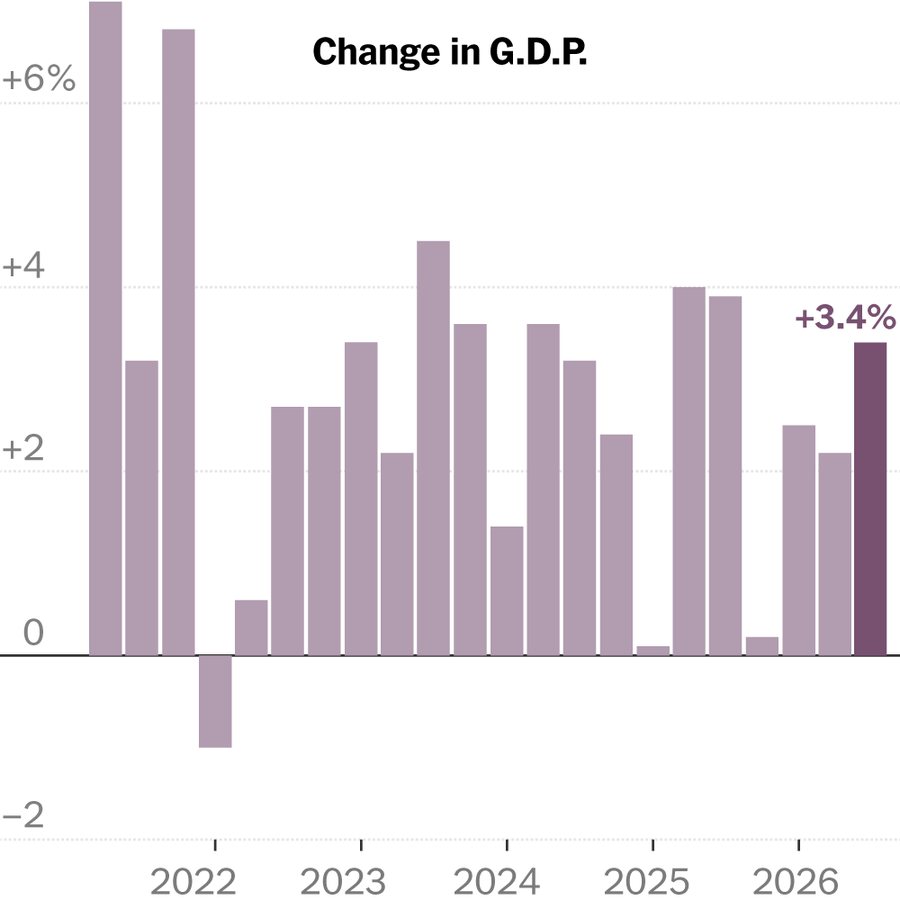
The United States economy grew 3.4 percent in the third quarter, its fastest pace in a year, according to the latest figures. The expansion was fuelled by strong consumer and business spending, a combination that points to a resilient economy heading into the closing months of the year.
The headline figure stands in sharp contrast to public opinion. Many American voters continue to give the economy poor marks, a gap that is likely to matter as the country moves toward the next round of national elections. Strong growth figures do not always translate into a sense of personal financial security, particularly for households still grappling with the cost of living.
Economists typically measure gross domestic product, the total value of goods and services produced in a country, to gauge the health of an economy. A rise of 3.4 percent over a single quarter is a notable pace, and it signals that spending across the economy remained robust through the summer and early autumn. Household spending is the largest component of economic activity in the United States, so strong consumer demand tends to carry particular weight in the overall figure.
The divergence between hard data and voter sentiment is a familiar theme in recent economic debate. Growth figures capture the broad direction of output and spending, while voters often judge the economy by prices, wages, job security and the cost of everyday goods. When prices remain high even as output expands, many households may feel little improvement in their day-to-day finances, and the gap between national statistics and personal experience can widen.
Quarterly growth figures are typically revised as more complete data becomes available, so the initial estimate is best understood as a snapshot rather than a final verdict. Analysts generally look at the pace of growth over several quarters to judge whether an economy is gaining momentum or simply experiencing a short burst of activity. A single strong quarter, however impressive, does not by itself settle questions about the durability of the recovery.
The figures will be closely watched by policymakers, businesses and investors in the weeks ahead. Strong growth can influence decisions on interest rates and government spending, while also shaping expectations about hiring and investment. Whether the pace of expansion can be sustained, and whether its benefits reach a wider share of households, will be central questions as the economy moves into the next quarter.
2