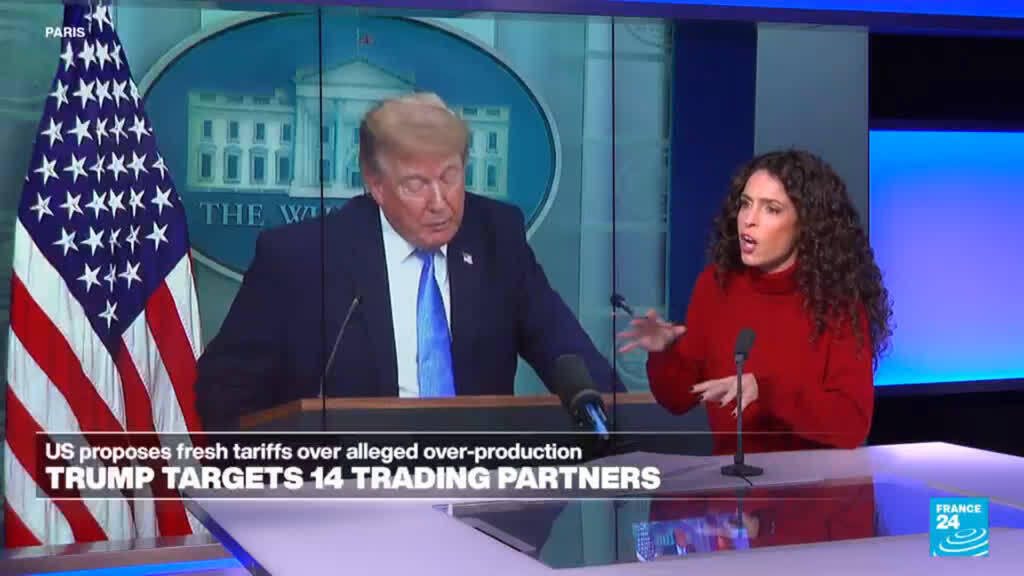
The United States has unveiled proposed tariffs on 14 economies, including the European Union and China, in the latest move by President Donald Trump to reshape Washington's trade relationships. The levies target some of the country's largest trading partners and would raise the cost of a wide range of imports if they are adopted.
The proposals follow a months-long investigation into alleged excess production, a concern that foreign producers are manufacturing more goods than their own markets can absorb and that the surplus is being pushed into the United States. The new tariffs will not take effect immediately. They must first undergo a period of public comment, giving businesses, trade bodies and other interested parties the opportunity to respond before any final decision is made.
The Wednesday announcement was the product of that probe, and its timing shows how the process is designed to work: the proposals are published first, and the public comment stage follows before any duties can be applied. Officials have not yet fixed the level of the duties in the material available, so the final rates for each of the 14 economies remain open until that stage is complete.
The move underlines how central tariffs have become to the Trump administration's approach to trade. Washington has used duties as a tool to pressure partners and to address what it describes as unfair trading practices, and the scale of the latest proposal, which spans 14 economies rather than a single country, signals a broad-based effort rather than a targeted dispute.
Major trading partners such as the European Union and China are among those affected, and their inclusion means the proposals will be closely watched across global markets. Changes to tariffs on this scale can affect the prices of goods, the flow of investment and the planning of companies that rely on cross-border supply chains, particularly for manufacturers that source components from more than one of the named economies.
For the Caribbean, where many economies depend on trade in goods and services with the United States and on the stability of global markets, developments in tariff policy among the largest economies can have indirect effects. Shifts in prices, demand and investment can travel through the wider trading system even when a small economy is not itself named in the measures. The final shape of the proposals, and the response from the affected economies, will determine how far those effects reach.
3