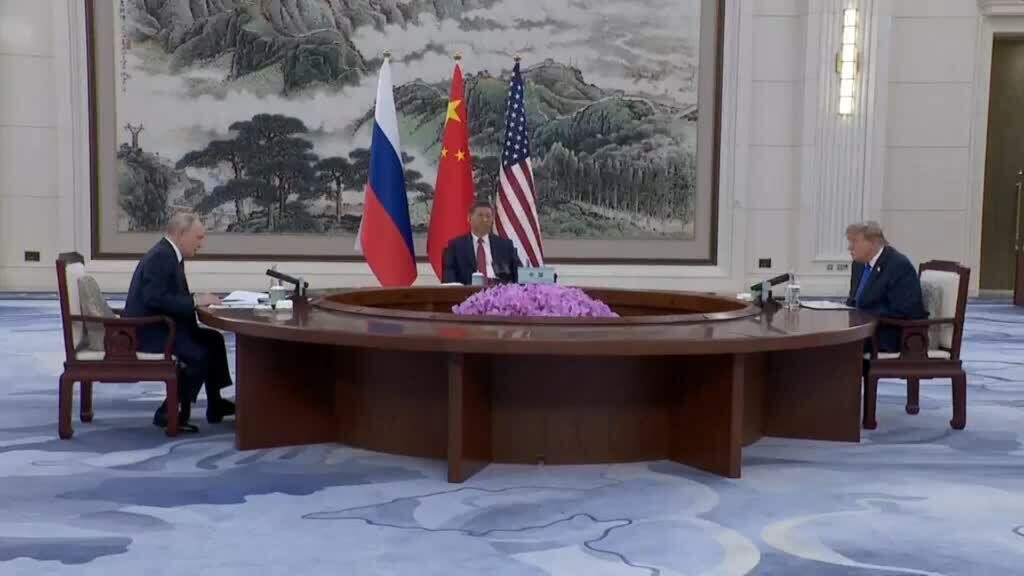
Chinese President Xi Jinping, US President Donald Trump and Russian President Vladimir Putin have opened their first trilateral talks in Shenzhen, on the sidelines of the Asia-Pacific Economic Cooperation (APEC) forum. The meeting brings together three of the most powerful leaders in the world for a format that has not been seen before.
Analysts expect the summit to offer more symbolism than breakthroughs. Critics, however, fear that such a gathering could carve the world into spheres of influence, with the major powers negotiating over regions and issues rather than through wider multilateral institutions. That concern is the central tension surrounding the meeting, and it explains why observers are reading the talks as much for their signals as for any written outcome.
According to the source reporting, a broad agenda is expected to be discussed. Ukraine, the war involving Iran, nuclear disarmament and artificial intelligence are all expected to come up during the talks. Each of these issues sits at a point of friction between at least two of the three leaders: Moscow and Western capitals remain divided over the war in Ukraine, Washington has been involved in the confrontation with Iran, and the three governments hold very different positions on arms control and the governance of emerging technologies.
Alongside the three-way discussions, Trump and Xi also held separate one-on-one talks focused on trade and technology. Those bilateral exchanges address two areas where Washington and Beijing have long been in competition, including tariffs, export controls on advanced chips and the broader rivalry over technological leadership. Because the United States and China together account for a very large share of global trade, the outcome of those talks is closely watched by businesses and governments far beyond the Asia-Pacific region.
The summit is taking place against a background of deep divisions between the three countries on several major issues. Russia's war in Ukraine has strained relations between Moscow and Western governments since 2022, while the United States and China have clashed over trade, technology controls and security in the Indo-Pacific. Beijing has tried to present itself as a stabilising power and a champion of multilateral cooperation, a position that gives its participation in a three-way format added political significance.
For smaller states, including Caribbean nations such as Dominica, developments among the major powers shape trade conditions, security priorities and access to international finance. Shifts in tariffs, shipping routes and aid priorities can reach small island economies quickly, even when they are not party to the talks. Whether or not the Shenzhen discussions yield concrete outcomes, they will be followed closely across the world for signs of how the great powers intend to manage their rivalries in the years ahead.
30