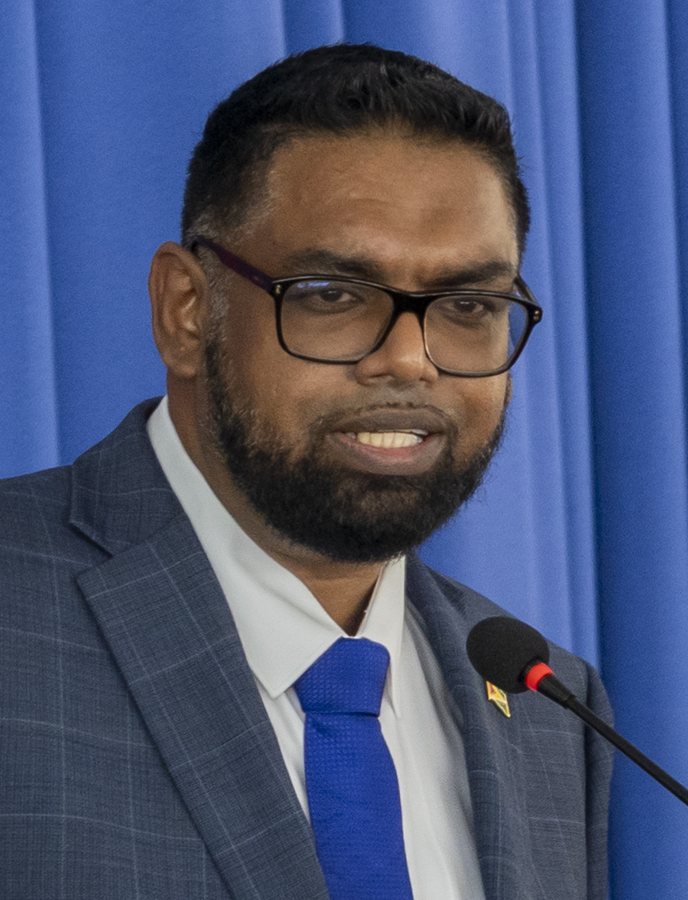
President Dr Mohamed Irfaan Ali has called for a “multidimensional” response to the rising cost of living in Guyana, saying the pressures on households stem from several converging factors rather than any single cause. The president said global imported inflation, shifting consumer habits and retail markups are all contributing to the higher prices Guyanese now face, and that the government's response must therefore be holistic.
“There are certain things that we don't have control over,” the president said, pointing to global inflation as a key example. He explained that international price movements have placed pressure on fuel and fertiliser costs. Although Guyana produces crude oil, the country imports all of its refined products, meaning it absorbs global price volatility on gasoline, diesel and cooking gas.
President Ali said this is why the government is pursuing investment in a local refinery, potentially linked to a national oil company, along with expanded fuel storage capacity. The aim, he said, is to build stability against future global shocks rather than relying on external markets for refined fuel.
Beyond fuel, the president noted that changing lifestyles are also shaping demand. He pointed to more families eating out and cooking less at home as part of the same shift in consumption patterns, which in turn affects household spending and the wider economy.
Separately, President Ali raised concerns about markups between farmers and retailers, citing cases where produce sold by farmers at a base price is marked up significantly by the time it reaches consumers. He suggested the creation of farmers' markets across the country to give farmers more direct access to buyers and reduce the gap between farm-gate prices and what shoppers pay.
The president also addressed the cost of bottled water, noting Guyana's capacity to meet local demand through domestic bottling companies. He cautioned against reliance on costlier imported water, saying local production should be able to supply the market at more affordable prices.
President Ali said the government's role is to enable the private sector rather than compete with it, though he acknowledged that essential commodities may require targeted attention. He stressed that no single policy tool, including grants, can fully address the cost-of-living pressures Guyanese face, adding that grants are meant to support vulnerable groups and family income, not resolve the underlying structural issues.
“We have to address this in a multidimensional frame,” President Ali said. “Cultural issues, changing eating patterns, changing buying patterns, the margins that are there, that is the only way. It has to be holistic.”
77