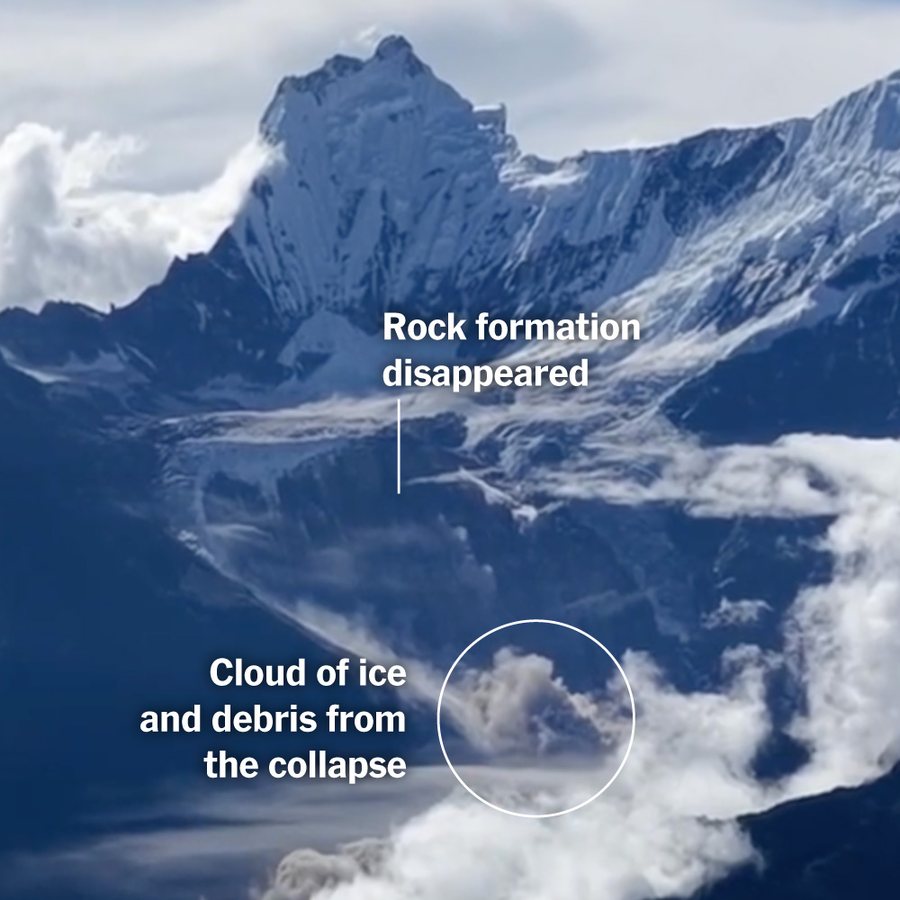
Exclusive videos verified by The New York Times show the clearest view yet of the avalanche in northern Nepal near Tibet that sent a wall of water and mud coursing through river valleys below. The footage captures the moments after a glacier collapsed, launching deadly flash floods that swept through communities in the high Himalaya.
The collapse occurred in a remote region of northern Nepal, close to the border with Tibet. The videos, which have been authenticated by experts, reveal the scale and suddenness of the event, which caught residents and authorities off guard. The wall of water and debris moved rapidly down steep mountain channels, overwhelming anything in its path.
Flash floods of this kind, known as glacial lake outburst floods, occur when a glacier retreats and leaves behind a lake dammed by ice or moraine. When the dam fails, or when an avalanche or landslide displaces the water, the sudden release can be catastrophic. In this case, the collapse of the glacier itself appears to have triggered the surge, sending a torrent of water, ice, and mud into the valleys below.
The videos provide crucial evidence for scientists and disaster managers trying to understand the sequence of events. They show the initial collapse, the formation of the flood wave, and its rapid advance downstream. This visual record is expected to help researchers model similar hazards elsewhere in the Himalaya, where climate change is causing glaciers to thin and retreat at an accelerating rate.
Nepal has experienced several such disasters in recent years, and the region is considered highly vulnerable to the effects of a warming climate. The melting of Himalayan glaciers has created hundreds of potentially dangerous glacial lakes, many of which are being monitored by satellite and ground-based instruments. However, the sheer number of lakes and the difficulty of accessing high-altitude terrain make it impossible to monitor every site closely.
The floodwaters damaged homes, infrastructure, and farmland in the affected valleys, and rescue teams were dispatched to the area to search for survivors and assess the extent of the destruction. Communication with the most remote settlements remains difficult, and the full toll of the disaster may not be known for some time.
Authorities in Nepal have urged residents in downstream areas to remain vigilant and to heed warnings from disaster management officials. The event underscores the growing risk posed by glacial hazards in the Himalaya, where rising temperatures are destabilising the landscape. Scientists say that such events are likely to become more frequent as the climate continues to warm, making early warning systems and community preparedness increasingly important.
The verified videos offer a rare and sobering look at the power of these natural phenomena. They also serve as a reminder of the challenges facing mountain communities in a changing climate, where the very landscape around them can become a source of sudden danger.
53