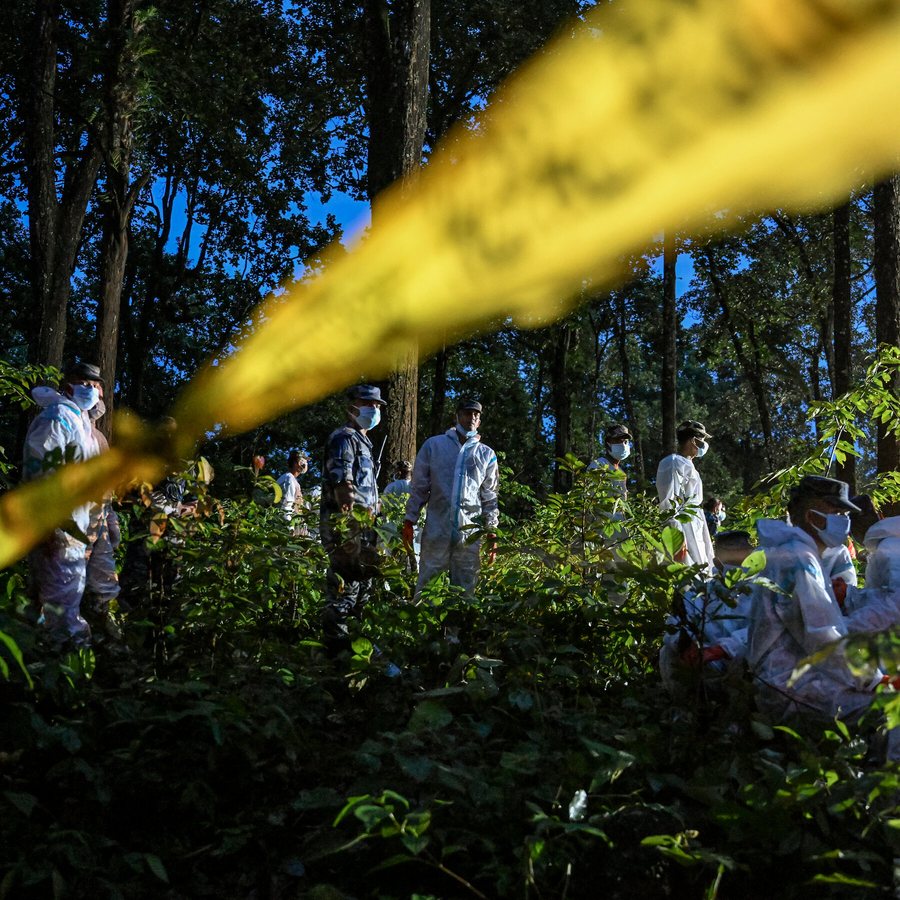
Nepal has resorted to mass burials for unidentified victims of the catastrophic flooding that has devastated the country, as thousands of people remain unaccounted for. The grim work was underway in Bharatpur on Sunday, where officers conducted a mass burial of victims whose identities could not be established, according to officials at the scene.
The decision to hold mass burials reflects the sheer scale of the disaster, which has overwhelmed local authorities and left families searching for loved ones without answers. In Bharatpur, a city in south-central Nepal that has been among the hardest hit, officials said the number of recovered bodies has outpaced the capacity to identify them or to hold individual funerals. The unidentified dead are being laid to rest in a communal ceremony, a step authorities described as a last resort to ensure dignity for the victims while the search for the missing continues.
The flooding, triggered by days of relentless rainfall, has swept away homes, bridges, and roads across wide swaths of the country, cutting off entire communities and complicating rescue and recovery efforts. Emergency crews have been working around the clock, but the scale of the destruction has stretched resources thin. In many areas, the floodwaters have yet to recede, leaving neighbourhoods submerged and hampering access to the worst-affected zones.
Officials have not released a precise figure for the number of missing, but humanitarian workers on the ground described the toll as staggering. The mass burial in Bharatpur is expected to be followed by similar measures in other districts if the identification process continues to lag. Authorities have urged families of the missing to come forward with any information that could help match the deceased with their relatives, and they have pledged to maintain records of the burial sites so that bodies can be exhumed and returned to families if they are later identified.
The disaster has also raised urgent questions about preparedness and infrastructure in a country that is highly vulnerable to extreme weather. Nepal, a mountainous nation in the Himalayas, has experienced increasingly erratic monsoon seasons in recent years, with scientists linking the intensity of such storms to climate change. The current flooding is being described as one of the worst in decades, with damage to farmland, livestock, and livelihoods that will take years to repair.
International aid organisations have begun mobilising to support the Nepalese government, providing emergency shelter, clean water, and medical supplies to displaced families. The United Nations and neighbouring countries have offered assistance, though the immediate focus remains on search and rescue. For the thousands still missing, every hour is critical, and the decision to hold mass burials is a stark reminder of the human cost of the catastrophe.
As the recovery effort enters its next phase, the people of Bharatpur and the surrounding region are left to mourn in a manner none of them anticipated. The mass burial site, marked by simple rows of graves, now stands as a sombre monument to the scale of the loss. Officials have said they will continue to work to identify the victims and to support the families of those who remain missing, even as the floodwaters slowly begin to recede.
48