North Korea has now opened road bridges to both of its closest partners, China and Russia, a development that is boosting trade with Beijing while stirring concern about a contest for influence over Pyongyang between the two powers. The New Yalu River Bridge, which links the North Korean border city of Sinuiju with the Chinese city of Dandong, formally opened on Thursday, 15 October, with trucks crossing in both directions during an opening ceremony.
The bridge is a four-lane cable-stayed structure of 3,026 metres. It was designed to ease pressure on the older Sino-Korean Friendship Bridge, which dates from 1943 and is only wide enough for a single rail track and one reversible lane. Chinese officials said the opening would strongly promote bilateral economic and trade cooperation, while North Korean cabinet chief Pak Thae Song said it would accelerate prosperity in both countries. Chinese Premier Li Qiang described relations between the two states as entering a new stage and opening a new chapter, and said the project had been championed by Xi Jinping and Kim Jong Un.
The bridge was a long time coming. Beijing and Pyongyang agreed to build it in February 2010, after Chinese Premier Wen Jiabao visited North Korea, and construction began that year. Its main structure was completed in 2014, but the roadway remained largely unused for the following years. The opening was delayed by missing connecting roads and customs facilities on the North Korean side, followed by North Korea's Covid-19 border closures, and by international sanctions over its nuclear weapons programme. Analysts quoted by Korean media estimated that hundreds of vehicles could cross each day, potentially moving Chinese goods and resources into North Korea. China remains North Korea's largest trading partner.
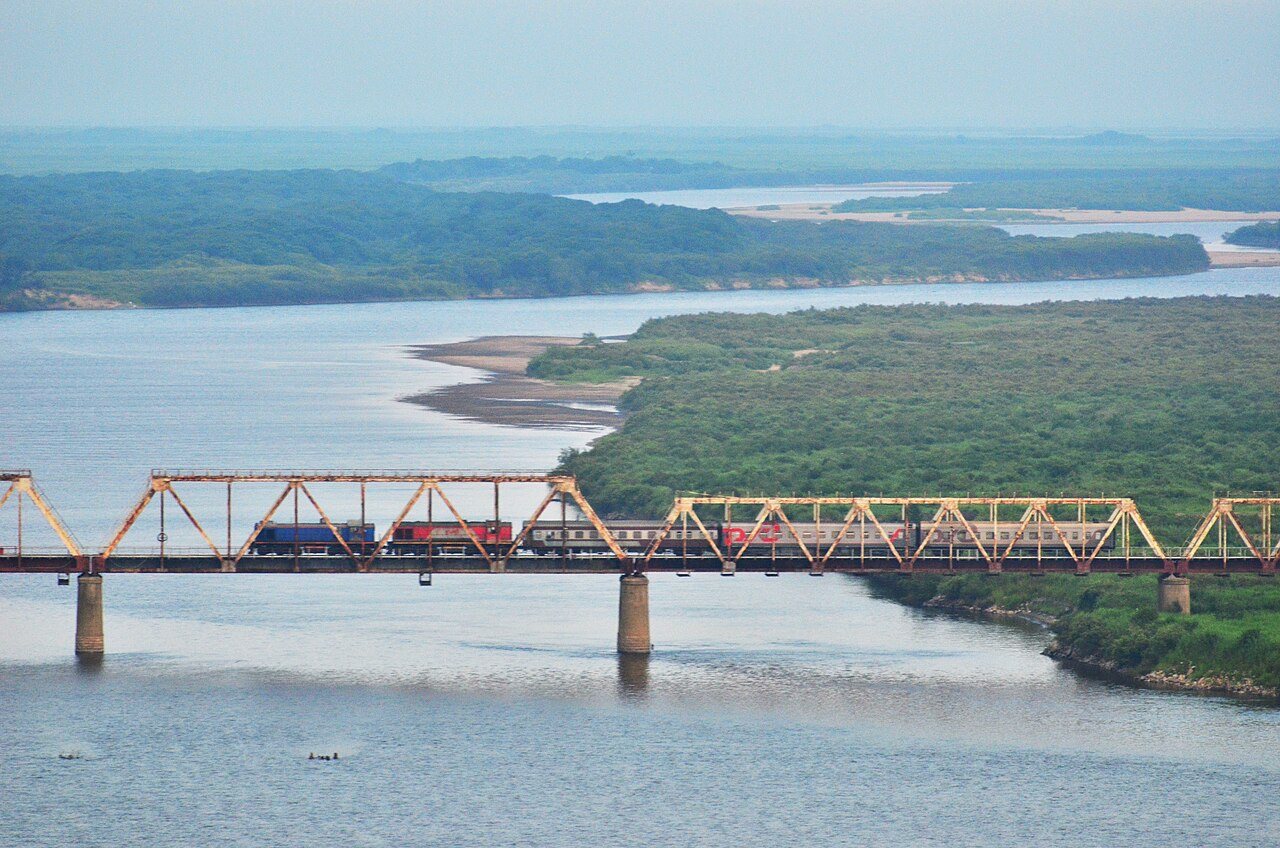
Russia opened its own link first. On Monday, 7 September, a road bridge over the Tumen River connecting Rason in North Korea with Khasan in Russia was inaugurated. The bridge is about one kilometre long and has two lanes. The Russian government said it can handle up to 300 vehicles a day through a new border crossing point. Russian Prime Minister Mikhail Mishustin and North Korean Premier Pak Thae Song attended the ceremony by video link. Mishustin said expanded transport infrastructure near the border would give a powerful boost to trade, economic, technological, scientific and cultural cooperation between the two countries.
The Russian bridge was named after Yakov Novichenko, a Soviet officer credited by North Korean state media with saving Kim Il-sung in 1946. Construction had begun in April 2025, after the agreement reached at the June 2024 Pyongyang summit between Kim Jong Un and Vladimir Putin. Until then, the only crossing between the two countries was a railway bridge dating from 1959. Both governments describe the road as a means to expand tourism, human exchange and commodity circulation, and analysts have noted that North Korea has supplied ammunition and troops to support Russia's war against Ukraine in return for economic and military assistance.
Observers have pointed to the sequence of the two openings as a signal of Pyongyang's diplomatic preferences. The Russian bridge opened first, and North Korea waited until after that ceremony before opening the Chinese crossing. Commentators have suggested that the Russian bridge may initially serve military and energy cooperation, while the Chinese bridge is primarily an economic channel. Beijing has reaffirmed its commitment to strengthening ties with Pyongyang, and relations, which were strained in 2024 by North Korea's deepening ties with Russia, have shown signs of renewed engagement since Kim attended China's Victory Day military parade in 2025 and Xi Jinping visited North Korea this year.
3