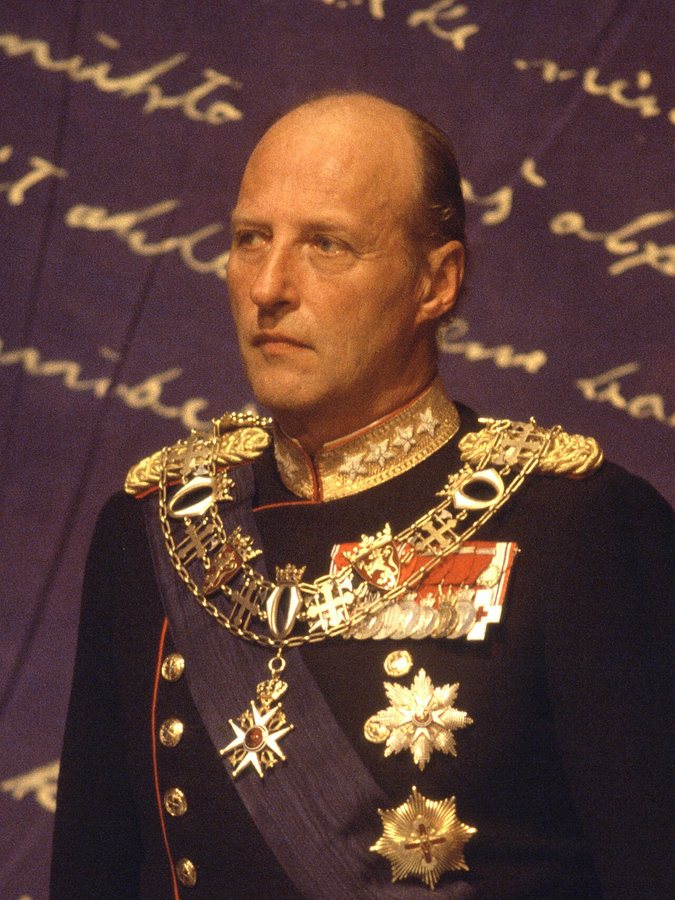
Thousands of people gathered outside Norway’s royal palace in Oslo to pay their respects to King Harald, who died Friday aged 89 after a reign of three and a half decades. His 53-year-old son immediately succeeded him on the throne, announcing he would reign under the name King Haakon VIII.
Harald’s death brings to a close a reign that began in January 1991, following the passing of his father, King Olav V. During his 35 years on the throne, Harald became one of the most widely respected figures in Norwegian public life, known for his efforts to unite the country across political and social divides. His tenure saw Norway navigate significant change, including the growth of its sovereign wealth fund and an evolving role within Europe and the wider international community.
The new King Haakon VIII takes over a constitutional monarchy that remains broadly popular among Norwegians. Haakon, who had served as crown prince since 1991, has been prepared for the role for decades and is expected to continue the traditions of a monarchy that has adapted to modern times while retaining deep symbolic importance for the nation. His accession was announced in a brief statement from the palace, which confirmed that he would adopt the regnal name Haakon VIII, a title that connects him to the long line of Norwegian kings bearing that name.
Flags across Norway were lowered to half-staff as the country entered a period of official mourning. The government is expected to announce arrangements for a state funeral in the coming days, with foreign dignitaries likely to travel to Oslo to pay their respects. The palace has asked the public to observe the mourning period with dignity and has encouraged those wishing to honour the late king to sign condolence books that have been opened at churches and public buildings throughout the country.
King Harald was born on 21 February 1937, the first Norwegian-born prince since the 14th century. He lived through the German occupation of Norway during the Second World War, spending part of his childhood in exile in the United States before returning to his homeland. His personal story, including his marriage to Sonja Haraldsen in 1968 after a nine-year engagement that tested the royal family’s traditions, endeared him to many Norwegians who saw him as a modernising figure within the monarchy.
In recent years, Harald’s health had declined, and he had been hospitalised on several occasions. He continued to carry out official duties well into his eighties, though with reduced public engagements. His final years were marked by a series of health scares that kept him away from some state functions, but he remained a steady presence in Norwegian public life until the end.
King Haakon VIII now assumes the throne at a time when European monarchies face questions about their relevance in the 21st century. Polls in Norway have consistently shown strong public support for the institution, and the new king is expected to build on that foundation. His reign begins with the immediate task of leading the nation through the mourning of his father and the transition to a new era for the Norwegian crown.
50