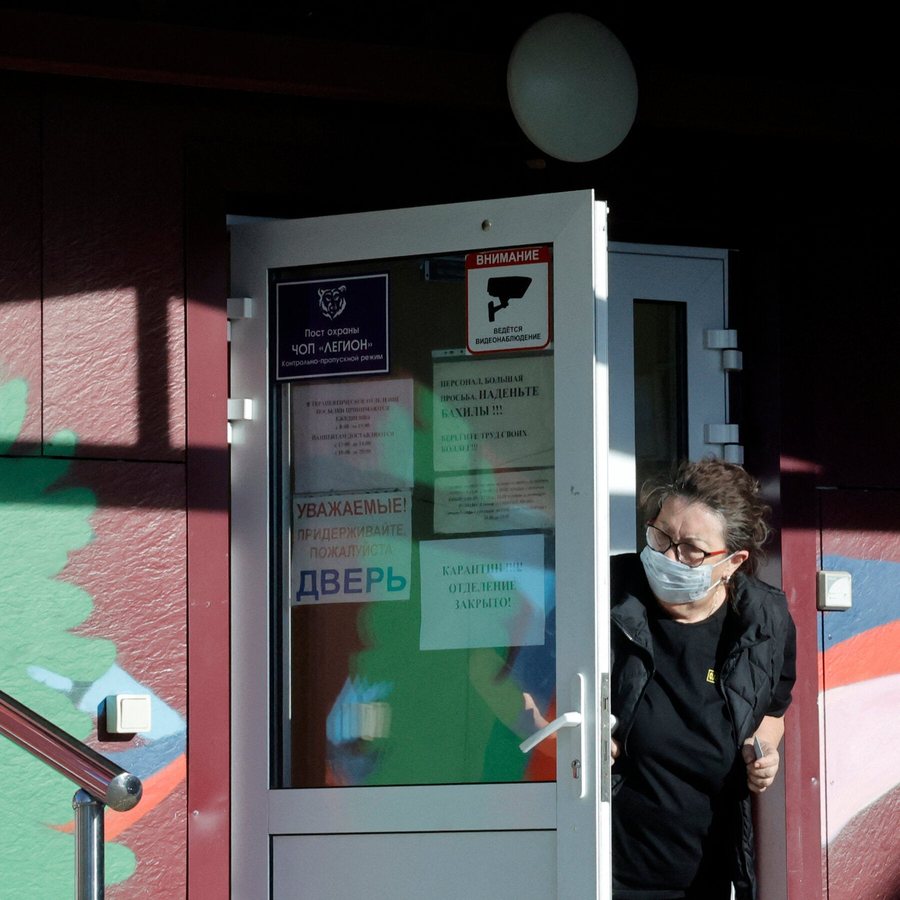
Russian health authorities are monitoring the contacts of a scientist who died after working at the Irkutsk Anti-Plague Research Institute, an infectious diseases facility in eastern Siberia, as officials seek to reassure the public that the risk of a wider outbreak remains low.
The employee died in the town of Shelekhov, near Irkutsk, where the institute is based. A security officer was photographed looking out from the doorway of the infectious diseases hospital where the patient was treated, underscoring the precautions taken around the case. The institute is one of a network of Russian research centres that study plague and other dangerous pathogens, and its staff routinely handle materials that require strict biosafety controls.
Plague is a bacterial infection caused by Yersinia pestis, the same organism responsible for the Black Death in the Middle Ages. It still occurs naturally in rodent populations in parts of Asia, Africa and the Americas, and humans can contract it through flea bites, direct contact with infected animals, or by inhaling respiratory droplets from a person or animal with pneumonic plague. Modern antibiotics can treat the disease effectively if it is diagnosed early, which is why public health agencies treat any suspected case with urgency.
Russian officials have not released detailed information about how the scientist may have been exposed, and it is not clear whether the death has been confirmed as plague. Health authorities in the region have said they are tracing people who had close contact with the patient and are applying standard infection-control measures. Such steps are routine when a dangerous pathogen is suspected, and they do not by themselves indicate that a wider outbreak is under way.
The Irkutsk institute is part of a Soviet-era system of anti-plague stations that was established to monitor natural plague foci across the country and to respond quickly to sporadic human cases. Scientists at these facilities conduct surveillance in rodents and other wildlife, develop diagnostic tests, and maintain stocks of vaccines and treatments. The work is considered essential but carries inherent risks, and laboratory-acquired infections have been documented in several countries over the years.
For Dominicans and others in the Caribbean, the immediate relevance is limited. Plague is not endemic in the region, and the Caribbean Public Health Agency and the Pan American Health Organization regularly assess global health threats for their potential to reach the islands. The Commonwealth of Dominica's own health authorities remain in contact with regional and international partners, and travellers are advised to follow routine guidance rather than alter plans based on this single case.
The episode nonetheless highlights how quickly reports of dangerous infections can spread online, often before official investigations are complete. Public health specialists say the appropriate response is to wait for verified information from recognised authorities, including the World Health Organization, rather than to rely on unconfirmed accounts. In Russia, regional officials have urged residents to remain calm and to seek medical attention if they develop sudden fever, swollen lymph nodes or breathing difficulties, symptoms that can resemble several other illnesses.
Further details are expected as laboratory tests are completed and the contact-tracing investigation continues. Until then, the case remains a localised public health event rather than a confirmed outbreak, and international agencies have not issued any travel or trade restrictions linked to it.
2