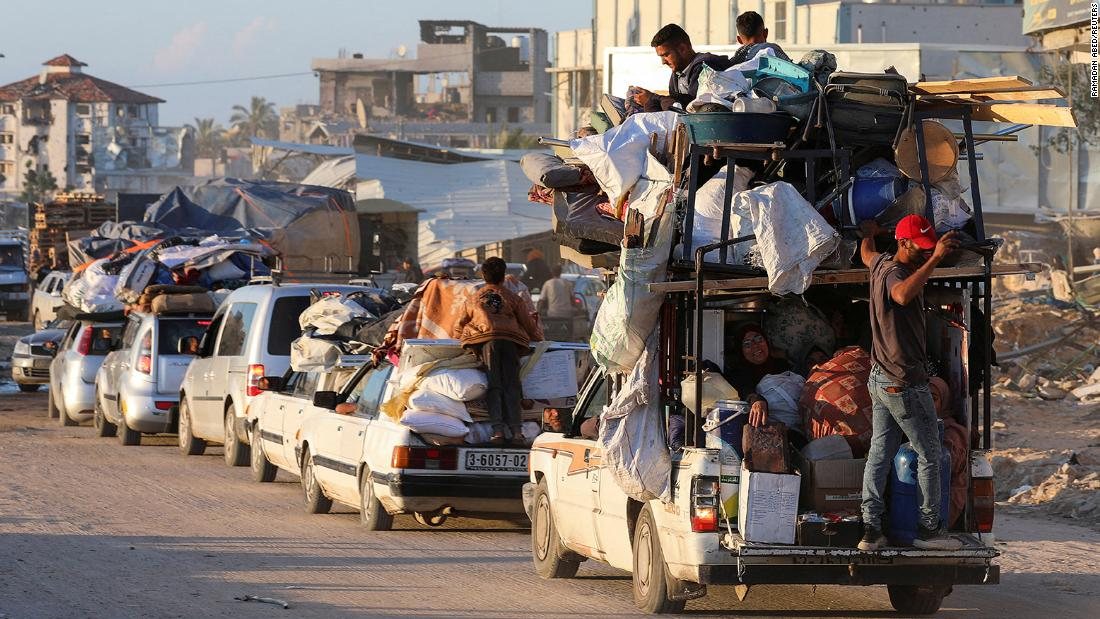
The Biden administration has concluded that Israel has gathered enough troops on the outskirts of Rafah to carry out a full-scale military incursion into the southern Gaza city in the coming days, according to senior US officials. The assessment marks a significant shift in Washington's public and private posture toward the operation, which has drawn international concern over the fate of more than a million displaced Palestinians sheltering in the area.
Senior US officials said they are currently unsure whether Israel has made a final decision to move forward with the operation. The uncertainty reflects the fluid nature of Israeli decision-making and the intense diplomatic pressure being applied by the United States and other allies to limit the scope of any ground offensive in Rafah, the last major population centre in Gaza that has not seen a full-scale Israeli ground assault during the current conflict.
The assessment was delivered as the Biden administration continues to press Israel to prioritise the protection of civilians and to avoid a major operation without a credible evacuation plan. Rafah has become a refuge for hundreds of thousands of Palestinians who fled fighting elsewhere in Gaza, and humanitarian agencies have repeatedly warned that a full-scale incursion could lead to mass casualties and worsen an already severe humanitarian crisis.
US officials have been engaged in intensive discussions with their Israeli counterparts in recent weeks, seeking to shape the military planning and to secure commitments on humanitarian access and civilian evacuation corridors. The administration has also publicly cautioned against a major operation in Rafah, while stopping short of demanding that Israel abandon the operation entirely.
The situation on the ground remains highly volatile, with continued exchanges of fire and ongoing diplomatic efforts to secure a ceasefire and the release of hostages held by Hamas. The United States has been a key mediator in those talks, working alongside Qatar and Egypt to bridge differences between the parties.
The potential incursion into Rafah would mark a new phase in the conflict, which began with the Hamas attack on Israel in October and has since resulted in a devastating Israeli military campaign in Gaza. The humanitarian toll has been severe, with thousands of Palestinians killed and much of the enclave's infrastructure reduced to rubble.
International pressure on Israel has been mounting, with several countries and humanitarian organisations urging restraint and calling for an immediate ceasefire. The United Nations and other bodies have warned of the risk of famine and disease outbreaks in Gaza, particularly if the Rafah operation disrupts aid deliveries through the crossing points in the area.
The Biden administration's assessment that Israel has sufficient forces in place suggests that the military preparations are largely complete, but the final decision rests with the Israeli government. US officials continue to urge Israel to exhaust all other options and to ensure that any military action is calibrated to minimise civilian harm.
The coming days are likely to be critical in determining whether the Rafah operation proceeds and under what conditions. Diplomatic channels remain active, and the United States is expected to continue its efforts to influence Israeli decision-making while managing the broader regional implications of the conflict.
46